
Whole house fans
What is a whole house fan
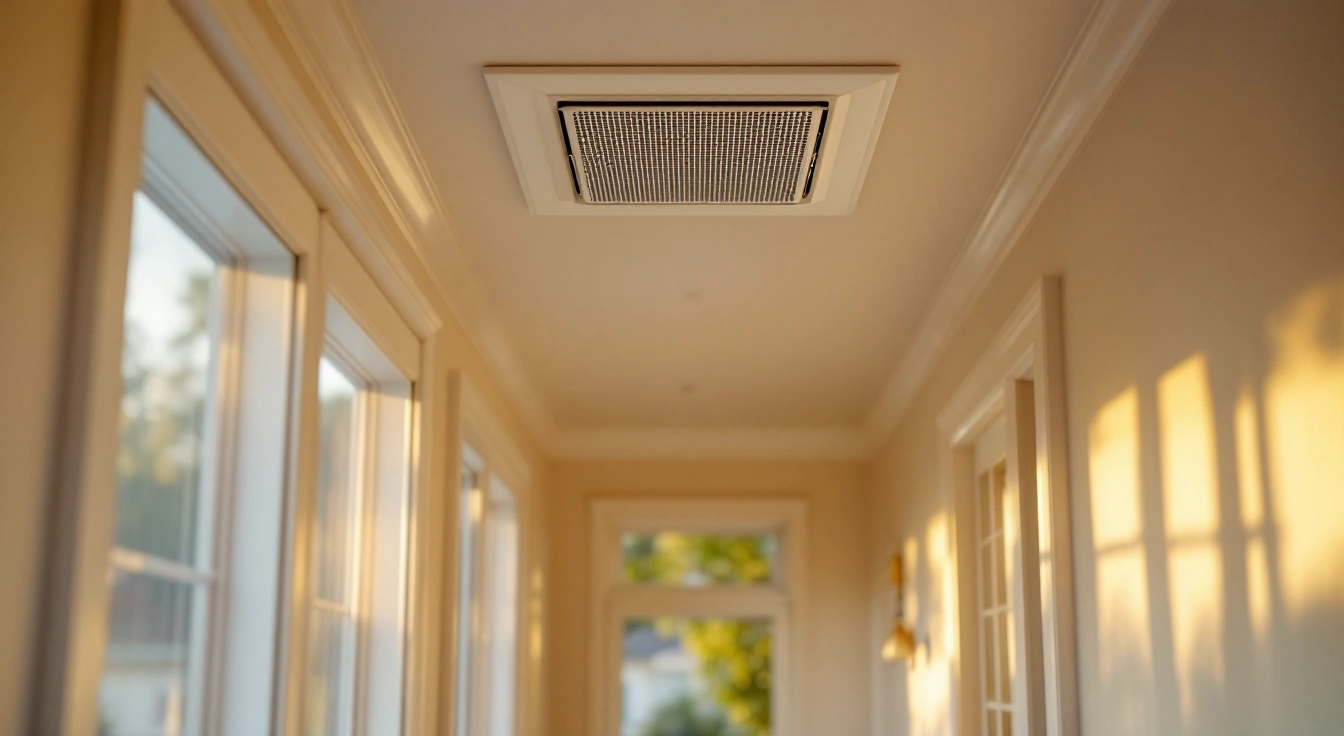
The short answer
What is a whole house fan? It pulls warm room air toward an approved outlet.
Last updated October 2026
What's covered8
What is a whole house fan? It pulls warm room air toward an approved outlet. Outdoor air replaces it through planned intake, usually open windows. Most ceiling units discharge into a vented attic. Other approved designs discharge outdoors.
The fan uses cooler outdoor air for room cooling. It does not refrigerate or dry the air like AC.
A whole-house fan and an attic fan move air from different spaces. The first exchanges occupied-room air. The second exhausts the attic itself. Before using either, identify the air path and building design. Whole-house cooling needs safe intake, suitable outdoor air and a discharge route. Capacity alone cannot establish those conditions.
What is a whole house fan air path?
Outdoor air enters the chosen windows, moves through rooms and reaches the fan's inlet. The fan exhausts warmer room air toward the outlet. Open doors or approved transfer paths help connect the rooms. A closed room may not receive the same airflow as the hall, even when the equipment is called “whole house.”
The PNNL whole-house fan guide describes this cooling task and the main designs. The ceiling opening needs air sealing. It also needs a closure for times when the fan is off. Poor closure can leave a heat-loss path. A fan can be useful at night and still need that off-season care.
A fan does not make incoming air colder than outdoors. It can replace warm air and create a breeze. That is different from a compressor-based cooling system. If the outside air stays too warm, pulling more of it inside cannot provide the same task as air conditioning.
Whole-house fan versus attic fan
An attic exhaust fan is normally mounted at the roof or gable. Its planned replacement air comes through outdoor attic intake. It does not pull air through living rooms by design. If room air reaches it through ceiling leaks, that is an unwanted route, not the intended room-cooling method.
| System | Intended intake | Air exhausted | Main limit |
|---|---|---|---|
| Whole-house fan | Suitable outdoor air through rooms | Room air | Windows and outlet must fit the flow |
| Attic exhaust fan | Outdoor attic intake | Attic air | Ceiling leaks can create unwanted suction |
| Air conditioner | Indoor circulating air | Heat through the cooling system | Different cooling and moisture-control task |
Scroll for more →
Stores and owners sometimes call a ceiling whole-house fan an “attic fan.” Use the physical air path to settle the meaning. Our fan-type comparison keeps the two jobs distinct before comparing products.
What is a whole house fan suitable for?
It is a candidate where cool outdoor air can be admitted safely. Nighttime conditions matter more than a general region label. Humidity and smoke can make outdoor intake unsuitable even when the temperature is lower. A house may use whole-house cooling during some periods and need AC during others.
Windows also have practical limits. An opening that cannot be used because of security or rain should not be counted as available intake. The operating plan needs usable openings, not theoretical glass area. Follow the exact installation guide and the home's assessed air path.
Fuel-burning equipment is another suitability check. Strong exhaust can affect pressure when replacement air is insufficient. PNNL describes concerns with appliances that use room air and with leaks to garages or crawlspaces. These cannot be settled by checking a motor's power label.
Main designs and installation needs
Traditional ceiling fans put the motor and blade near the ceiling opening. Some use a belt between motor and fan. They can need framing work and a separate seasonal cover. A suitable mount and guard are part of the installation, not optional noise accessories.
Ducted designs connect a ceiling grille to a separated motor. They need space for the specified duct and suspension arrangement. The route can help reduce transmitted noise, but is not a promise of silence. Do not compress the duct into an attic that cannot fit the required layout.
Insulated joist-mount designs use a closure at the room-to-attic boundary. Compare thermal resistance separately from leakage. A stated R-value does not prove that the installation is airtight. The exact opening and control requirements still apply.
Compare closure designs when off-season heat loss is part of your decision. See the best whole house fan guide.
For broader equipment choices, use the whole-house fan comparison. It sets out a ducted, insulated and conventional layout rather than claiming a universal winner. Each choice has a building-dependent drawback.
Sizing and safety next steps
The whole-house fan calculator compares named airflow methods. Use the total served home area and actual average ceiling height. Then check open-window and outlet area. A result does not certify combustion safety or the attic design.
Read the installation guide before selecting a discharge route. A standard attic-dumping unit should not be placed in an unvented roof assembly by assumption. If a direct outdoor system is needed, follow that exact model's requirements. Building fit precedes the product choice.
FAQ
Does a whole-house fan need an attic?
Many common ceiling models discharge into a vented attic, but approved direct-outdoor designs also exist. The exact product and roof assembly decide the route. Do not discharge room air into a sealed attic simply because a grille can fit the ceiling. Confirm the installation design first.
Can it work with windows shut?
The planned replacement-air route must be open before a conventional whole-house fan runs. Closed windows can restrict airflow and create pressure concerns. Do not run the fan to test that condition. Any alternative intake system must be specifically approved in the installation design.
Will it cool every room equally?
Not necessarily. The inlet location and room paths affect airflow. Closed doors can isolate rooms from the route. A “whole house” label is not a measured coverage guarantee. Choose a system and operating plan that account for the actual rooms it is intended to serve.
Is it a replacement for AC?
It serves a different task. A fan can use suitable cool outdoor air, while AC can cool and remove moisture when outdoor conditions are unsuitable. Do not assume a fan can provide the same comfort during hot or damp weather. Compare the intended use, not just equipment power.
Verdict
What is a whole house fan? It is a room-air exchange system with an intake and discharge plan. Its usefulness depends on outdoor conditions and the home's layout. Start with that fit, then compare exact capacity, closure and installation requirements.
Compare the QuietCool whole-house fan layouts when a ducted route matches the home.