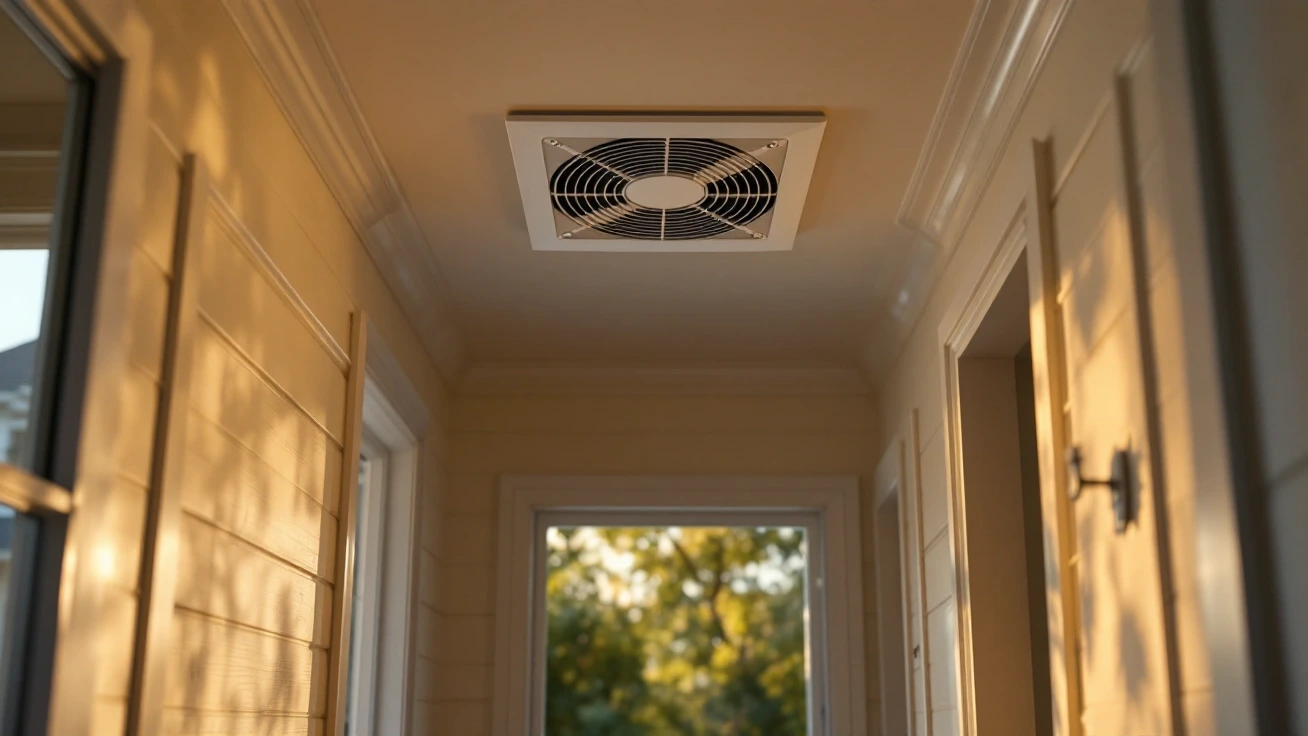
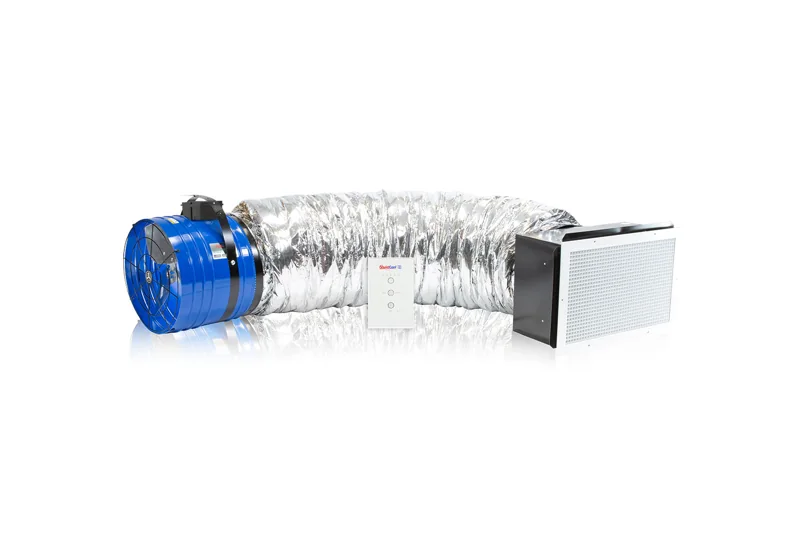
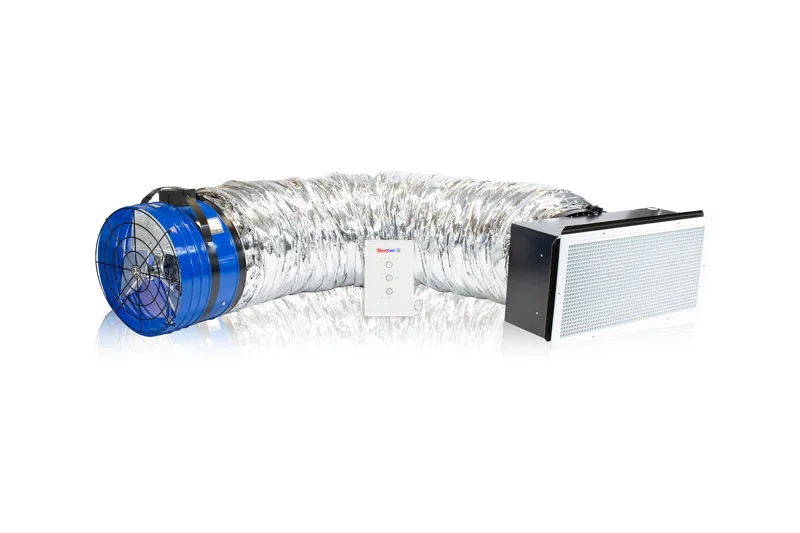
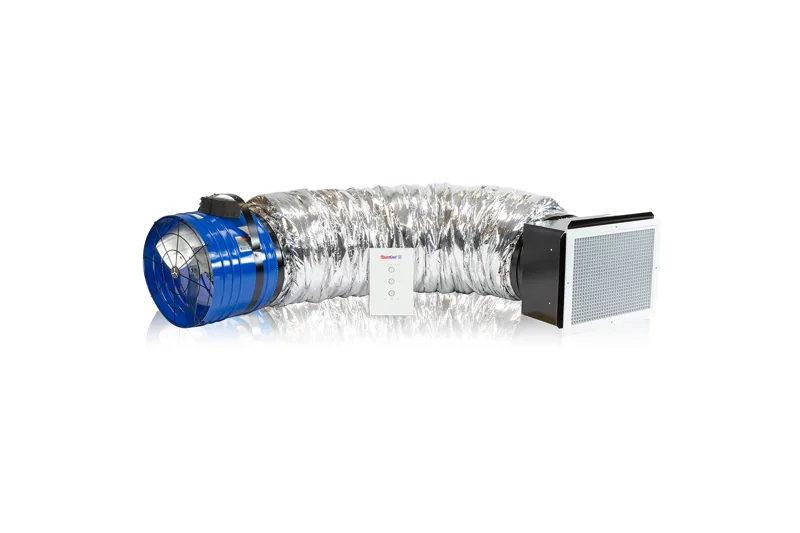
Compare CL-2250 RF, CL-3100 RF and CL-4700 RF against the served-room airflow task. All need a workable duct route, open-window intake and an adequate discharge path.
A ducted whole house fan joins a ceiling grille to a remote motor. That layout needs room for the duct and a safe route for outdoor replacement air. These three current QuietCool Classic RF options cover different listed airflow levels. The comparison uses published facts, with no installed-sound test or cooling promise.
Keep in mind: Confirm dimensions, installation scope and suitability with current manufacturer documentation before purchase.
CL-2250 RF is the lower listed capacity in this Classic RF group. It has an insulated damper and a wireless control package. Compare it for a room-air task that fits the exact model's flow. A smaller motor label does not remove the need for a safe window inlet.
The useful choice is a duct route that the attic can hold as directed. Do not buy first and crush the duct to make it fit later. Keep the supplied guide with the model so that the motor support and air path stay part of the plan.
Keep in mind: Confirm dimensions, installation scope and suitability with current manufacturer documentation before purchase.
CL-3100 RF is the middle listed capacity here. Its R5 damper is part of the ceiling-to-attic closure. It does not prove that the surrounding frame is sealed or that the installed system has no sound. Those are separate checks.
The RF suffix also matters to the control package. Do not price or plan this bundle from an older sheet that describes a separate switch. Check which current guide belongs to the unit in the box before settling the final route and control position.
Keep in mind: Confirm dimensions, installation scope and suitability with current manufacturer documentation before purchase.
CL-4700 RF is the higher listed capacity of these three picks. That can suit a larger room-air task, but it also makes the inlet and outlet plan important. Choose the flow that the building can use, rather than the largest figure the ceiling opening can accommodate.
The ducted motor still needs its full planned space. A grille that fits does not establish a clear route past framing or insulation. Match the current supplied instructions to the room and attic layout before treating this as a direct replacement.
Factors to consider when choosing a ducted whole house fan
The duct is an acoustic and airflow path. Follow its required route rather than crushing it into an available gap. PNNL's whole-house guide explains the separated motor arrangement and off-season closure needs. That general design benefit is not a matched sound test of these units.
Ducted whole house fan operation and limits
Follow the whole route
Draw the path from an open window, through the served room and toward the ceiling grille. Then follow the duct to the motor and the planned discharge. A closed door can break that room path. A clear grille cannot show what happens beyond it. Both sides of the inlet need to work.
The duct should keep the shape and support shown in the exact guide. A sharp bend or a crushed section changes the path the model was designed to use. Do not shorten or swap parts by guesswork. If the attic cannot hold the supplied layout, compare another system before cutting the ceiling.
Keep the fan's task clear
The fan brings outdoor air through rooms. It does not make that air cold or dry. A cool, clear evening can suit that task; a hot or smoky night may not. Check the outdoor conditions before a long timed run. An app or remote cannot make poor outdoor air suitable.
Think about sound reaching the rooms as well as sound from the motor. Air through a grille can be heard even when the motor is remote. A mount can also pass vibration into framing. The duct is one part of that system. It is not proof of silence at every speed.
Open suitable intake windows before operation. Outdoor air needs to be cooler and suitable for the home. A fan is not a dehumidifier or smoke filter. Fuel-burning equipment and possible garage-air paths need assessment before use. A CFM target does not prove safety.
Read the installation guide before choosing a model. If the attic is unvented, the outlet must follow an approved direct-discharge design. Do not dump room air into a sealed roof space because a ceiling grille can be fitted there.
How We Picked
The three picks are current Classic RF packages with different listed capacities. US catalog identity was checked on October 16, 2026. The comparison keeps the RF bundle separate from older standalone sheets. The models cover ducted room cooling rather than attic-only exhaust.
Verdict: ducted whole house fan decisions
A ducted whole house fan should fit the served-room airflow task. Compare CL-2250 RF, CL-3100 RF and CL-4700 RF on that basis. All need a workable duct route, open-window intake and an adequate discharge path.
FAQ
Does a duct make the fan silent?
No. It can separate the motor from the ceiling grille, but flow and vibration still create sound. The route and suspension matter. Compare only matched sound ratings at the intended speed. No measured installed-noise ranking is claimed for these three models.
Can I shorten the supplied duct?
Follow the exact installation guide. The supplied route may be part of both airflow and noise control. Changing it to fit a tight space can alter performance. Select a layout that fits the documented requirements rather than treating the duct as spare flexible material.
Is an insulated damper airtight?
Insulation and air sealing are different properties. A stated R-value describes thermal resistance, not zero leakage. Check the exact closure and its installation. A seasonal cover, if used, must be removed before operation. Our whole-house fan comparison includes an insulated-door assembly alongside the ducted choices.
Where can I compare other fan layouts?
Our whole-house fan picks compare ducted units with an insulated-door assembly. Use that broader comparison if space or closure fit is unresolved. Choose the layout after confirming intake and outlet, rather than forcing a ducted model into an unsuitable attic. Keep the current model and supplied instructions together for the final check.