Compare HV1600R38 where its insulated-door layout fits, or the two QuietCool RF units for a suitable ducted route. R-value does not prove the installed opening is airtight.
An insulated whole house fan needs a closing seal as well as insulation. Compare the Tamarack HV1600R38 with the ducted QuietCool CL-3100 RF and ES-4700 RF. Their closure and airflow arrangements differ. We use exact catalog facts and published guidance, with no measured heat-loss or sound claim.
Keep in mind: Confirm dimensions, installation scope and suitability with current manufacturer documentation before purchase.
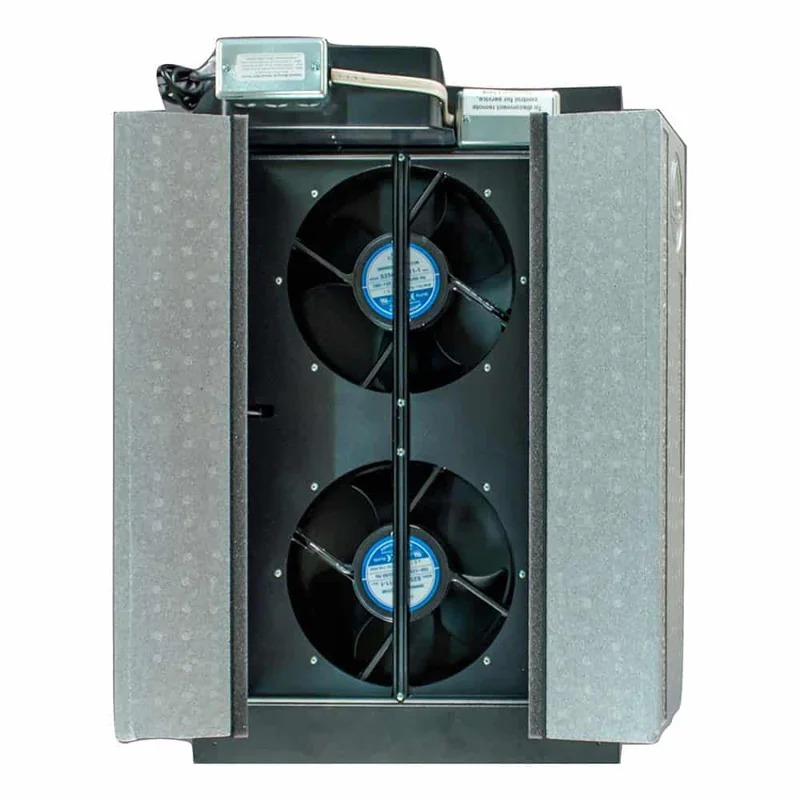
HV1600R38 is the insulated-door arrangement in this comparison. Compare it where that closure and mounting approach suit the ceiling. The door rating does not describe leakage around the installed frame. Keep the perimeter detail and the mechanism that opens the doors in the same assessment.
The published product facts used here do not settle an airflow rating for this variant. Do not infer one from the model name. Confirm the exact capacity and installation directions before using it in a sizing decision. Its closure can be attractive while the full building fit remains unresolved.
Keep in mind: Confirm dimensions, installation scope and suitability with current manufacturer documentation before purchase.
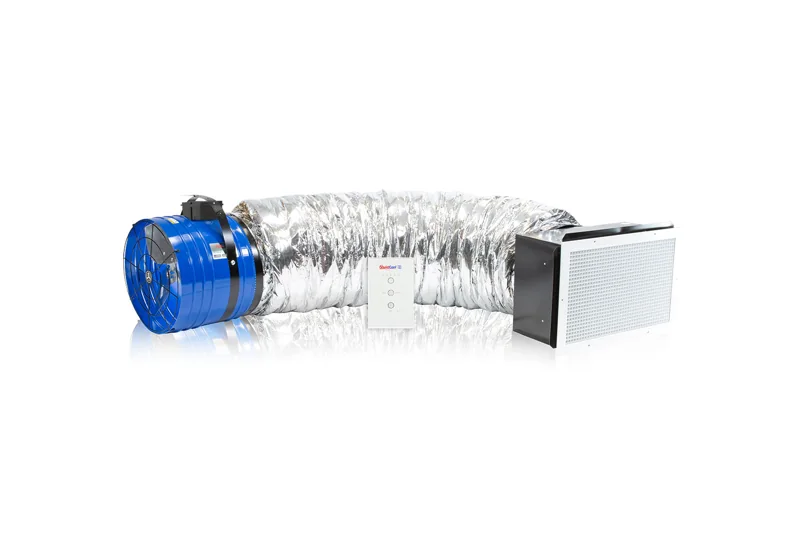
CL-3100 RF takes a ducted route with an insulated damper box. Compare the whole route from the room grille to the suspended motor. The damper-door rating belongs to that part. It does not mean that the duct, ceiling joint and entire opening have one shared insulation value.
Keep the listed high and low airflow with their own input power. Neither setting establishes a room result without suitable window intake and attic discharge. The smaller grille detail also needs its own opening check. Do not assume an old ceiling grille makes the new assembly a direct fit.
Keep in mind: Confirm dimensions, installation scope and suitability with current manufacturer documentation before purchase.
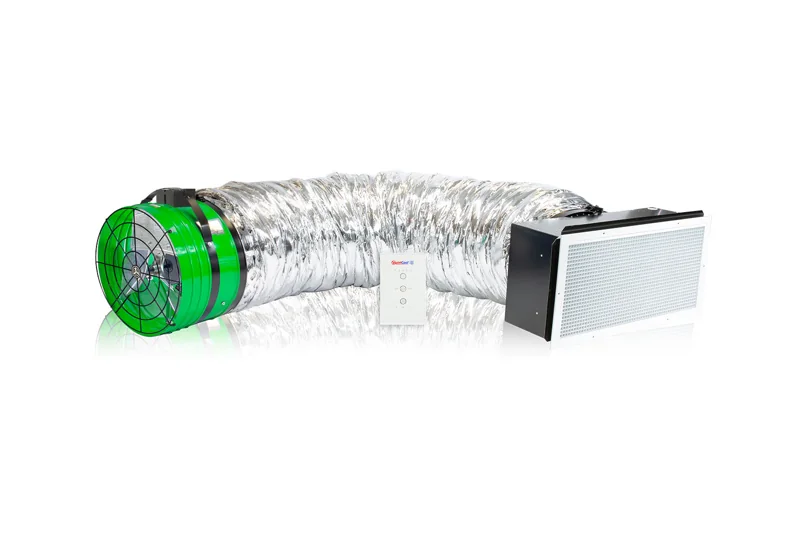
ES-4700 RF is another ducted option with insulated damper doors. Its operating states differ from the Classic unit. Compare those states for the room-air task before letting the motor type decide the purchase. A low-input mode should not be paired with the higher mode's airflow.
The listed venting and cutout requirements remain practical limits. Include the duct, suspension and control work in the scope. No installed air-leakage or heat-loss result is supplied here. Choose between this unit and the others by complete fit rather than treating the most favorable individual rating as the whole answer.
Factors to consider when choosing an insulated whole house fan
R-value describes resistance to heat flow through the rated part. Leakage describes air passing through gaps. They are different properties. A thick insulated door can have a poor perimeter seal.
A careful installation should account for both without presenting one as a substitute for the other.
PNNL's whole-house guide discusses closure insulation and sealing at the ceiling boundary. The opening is a path to an unconditioned attic when the fan is off. The surrounding ceiling treatment matters as well as the closure itself. Record the exact assembly rather than treating one number as the whole result.
Insulated whole house fan seasonal use and limits
Compare the closed ceiling detail
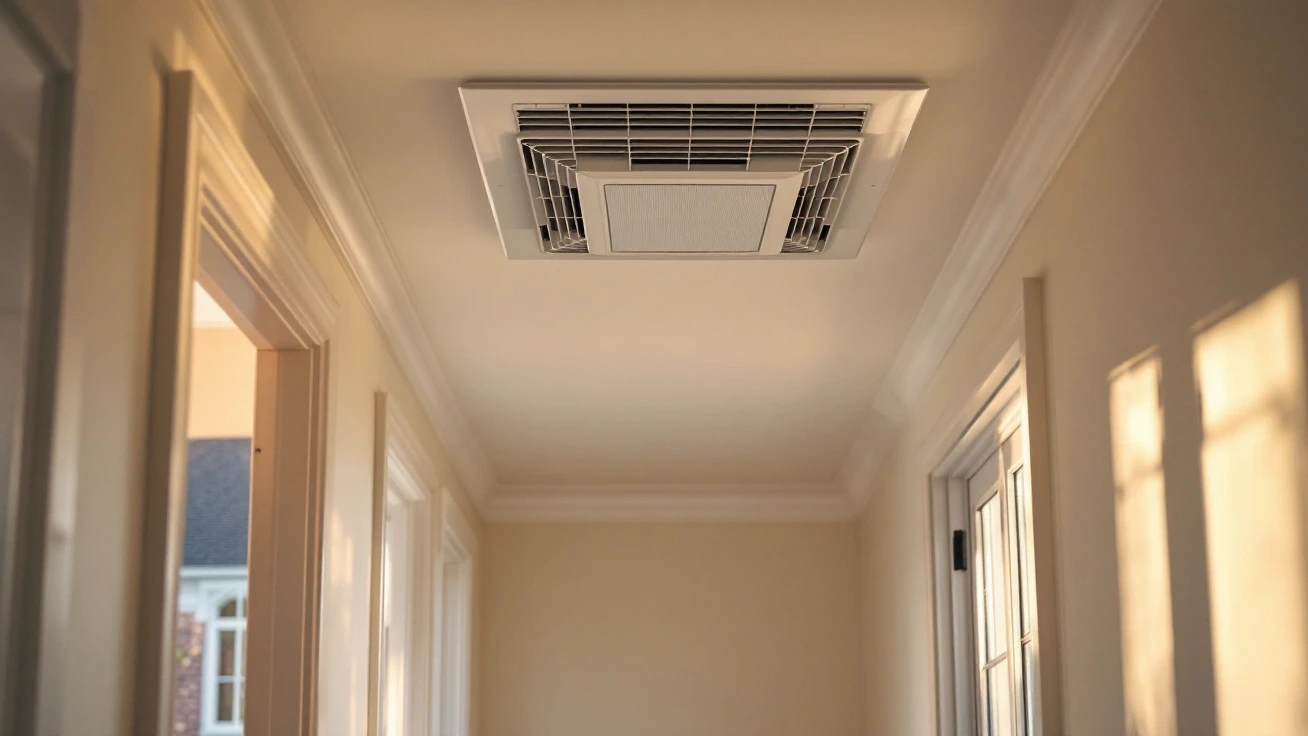
Look at where the closure sits when the fan is off. Keep its insulation value with that specific part, rather than apply it to the entire ceiling opening. The surrounding frame and joints remain part of the heat and air path. A high value on the door cannot describe a gap around an unsealed frame.
The installation record should show how the assembly meets the existing ceiling insulation. Check whether the closure moves freely after the surrounding insulation is in place. Do not place loose material where it can fall into a grille or block moving parts. More insulation is useful only where the exact detail allows it.
Keep capacity separate from the closure
The Tamarack record describes its insulated-door assembly. The two QuietCool records describe ducted assemblies with different airflow states. They are not the same fan with different insulation labels. Compare the served-room air task before choosing a closure.
A well-insulated product can still be the wrong size or mounting arrangement for the house.
Use the actual window-opening plan and outlet rating with the required fan flow. A duct route that fits in a drawing may be blocked by framing or stored items. A joist-mounted assembly needs its own clear opening and service space. Check these physical limits before deciding which insulation label looks most attractive.
Do not convert R-value into a bill saving
An R-value compares resistance to heat flow through the rated part. It does not measure the hours the fan operates, local weather or leakage at the installed joint. Those are separate inputs. No household saving or payback is calculated from these labels, and no claim of zero leakage is made for any of the picks.
A removable seasonal cover must be kept separate from normal automatic closure. It can block the air path when the fan starts. Follow its removal instructions and keep the fan out of use while it is fitted. Do not leave a remote or timer ready to start behind a blocked grille.
Insulation also does not determine operating suitability. A whole-house fan still needs safe open windows and a checked discharge route. It should use suitable cool outdoor air. Smoke, moisture and combustion concerns remain separate checks.
For installation scope, use the whole-house fan installation guide. For broader mounting choices, use the homepage comparison. A fan that has a favorable closure label still may not fit the room-air target or attic layout.
Record the closure state for service
Keep the model guide where it is easy to find. Note which closure is fitted and how it is kept clear. If another cover is used, record when it is put on and removed. The person using the switch needs that information.
Do not rely on a label deep in the attic.
Check any change after roof or insulation work. Material can move into a door's path. A duct can be pressed against a mount. Keep the fan out of use if the closure cannot work as designed.
Service should restore the right air path, not force the motor to run against a blocked inlet.
How We Picked
The selected records distinguish an HV1600R38 door assembly and two QuietCool RF ducted units. Their US catalog identities were checked on October 16, 2026. The insulation values describe the named parts. They are of installed leakage or whole-house heat loss.
Mounting and capacity remain separate selection checks.
Verdict: insulated whole house fan decisions
Choose an insulated whole house fan by the complete closure and air path. Compare HV1600R38 where its insulated-door layout fits, or CL-3100 RF and ES-4700 RF for a suitable ducted route. R-value does not prove the installed opening is airtight.
FAQ
Is the highest R-value always the right choice?
No. It describes the rated insulated part, not the complete installation. Capacity and opening fit still matter. Compare sealing and the closure mechanism too.
A product with a higher insulation label can be unsuitable if the attic space or control arrangement does not match its guide.
Does an insulated door make the fan airtight?
No airtightness result is inferred here. Thermal resistance and leakage measure different things. Check any actual leakage data for the exact assembly and its installation. The surrounding ceiling opening also needs sealing.
A self-closing mechanism is useful, but does not prove zero air passage.
Can I add a cover and still use the fan?
A removable seasonal cover generally blocks the normal air path and must be removed before operation as its instructions require. Do not assume automatic doors can overcome a second cover. Keep the fan out of use while covered and make the seasonal state clear to everyone using the controls.
Where do I check airflow and outlet area?
Use the whole-house airflow calculator with the actual served area and ceiling height. Then compare the exact model's rating basis and guide. A suitable airflow number does not approve combustion safety or show that an unvented attic is an acceptable outlet.