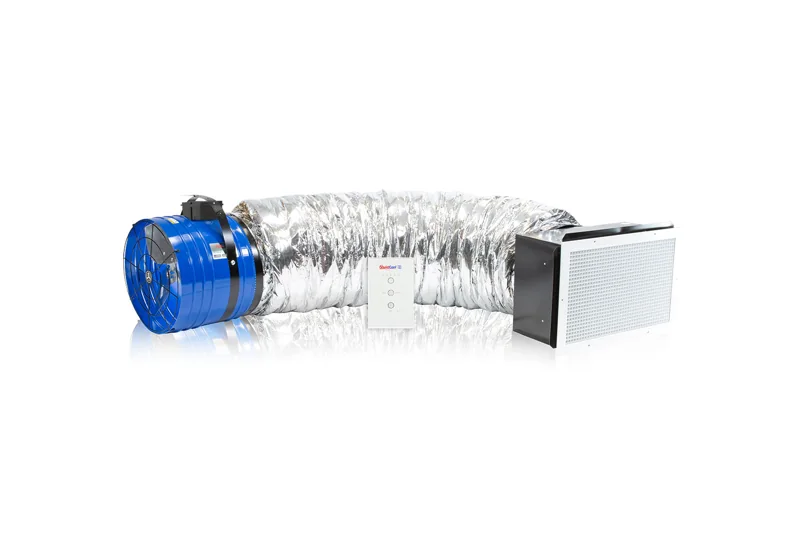
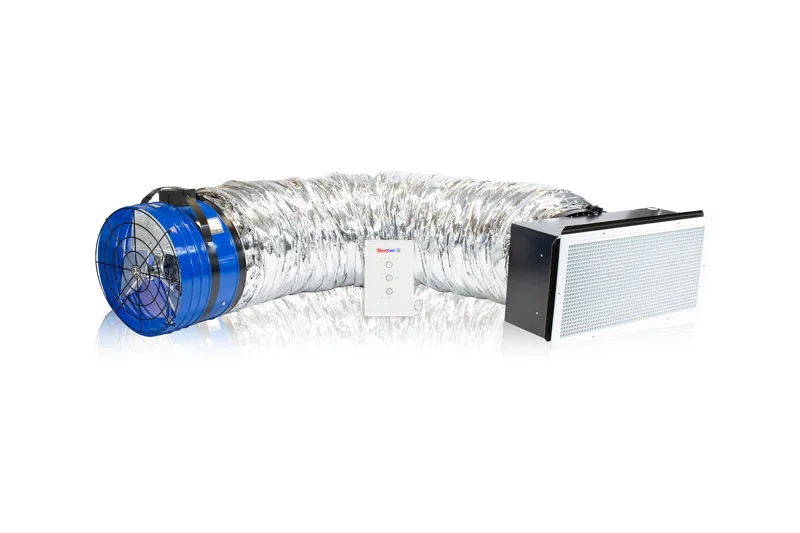
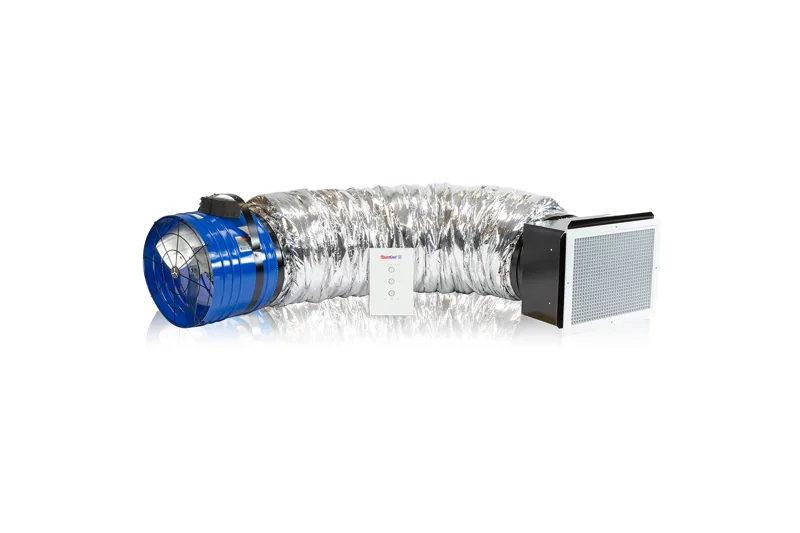
Choose among the three Classic RF capacities by the served-room task and attic space. A larger fan needs a matching intake and outlet plan; no model wins every house.
A Quiet Cool whole house fan should match the rooms, open windows and outlet path. This guide compares current CL-2250 RF, CL-3100 RF and CL-4700 RF packages. It keeps them separate from older standalone model sheets. The selection is based on current catalog facts and published documents.
Keep in mind: Confirm dimensions, installation scope and suitability with current manufacturer documentation before purchase.
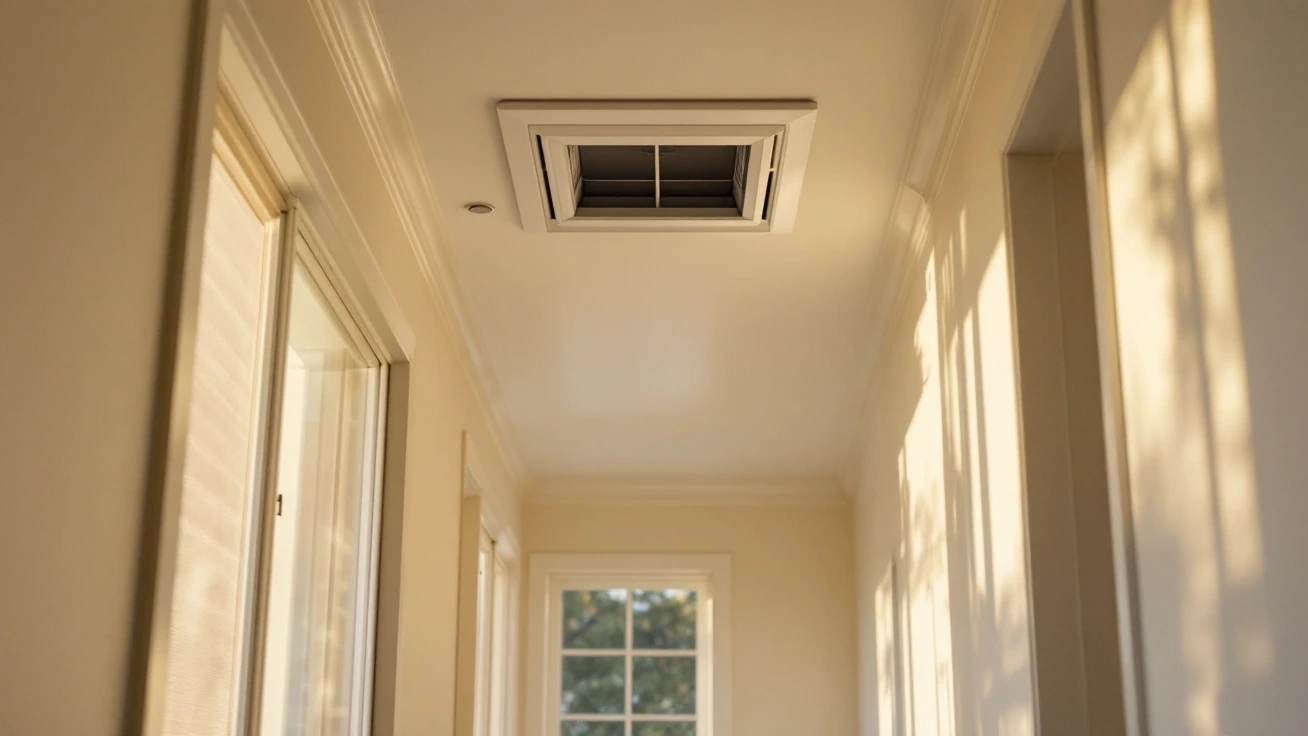
The fan motor head hangs from the attic rafters, and the intake grille needs a ceiling cut-out of 14 in. x 30 in.
Factors to consider when choosing a Quiet Cool whole house fan
These are conditional examples, not a ladder where the last model is always best. Capacity should follow the served-room task. An inlet in a hallway may not serve an isolated room as expected. The approved layout needs to account for the actual doors and air paths.
A floor-area claim alone cannot do that.
Choose the air path before the motor
A whole-house cooling unit exchanges room air. An attic exhaust unit removes attic air. QuietCool sells both. The model family and physical inlet should identify the task.
Do not choose an AFG or AFR attic fan because its coverage label seems to match the home's floor area. Its replacement air and mount are different.
For attic exhaust, use QuietCool attic fan choices. For a broader room-cooling layout choice, use the homepage comparison. These internal routes keep the intended task clear. A shared manufacturer does not make the equipment interchangeable.
Size with actual measurements
Use total served conditioned area and average ceiling height. A vaulted room can add volume beyond an eight-foot assumption. A two-story home also needs the served upper floor counted. Do not use only the attic footprint.
That measurement belongs to a different passive-vent task.
The airflow planner names its HVI or PNNL method. They are not blended into a confidence interval. A range reflects a planning choice, not a guaranteed installed output. Compare the exact product's rating basis with the chosen method and intended speed.
Keep any unresolved basis visible.
Check the room and attic openings
Open-window guidance belongs to the actual exposed screened opening. The glass and frame that remain closed do not provide intake. The use plan should also account for security and rain. A house that cannot use enough suitable openings may need a different cooling route, regardless of the fan label.
Outlet area should use stated NFA ratings. Screens and louvers are already accounted for in a published free-area rating. Do not apply a second guessed reduction to the rating. Do check for insulation or dirt blocking the passage.
A known rating and a clear actual route are different facts.
Quiet Cool whole house fan source revisions and review basis
This comparison uses maker documents checked for the named examples. No customer stars, invented awards or household savings are used to fill gaps. A recommendation is tied to mounting and use conditions, with a limitation for each pick.
The presence of several source versions is not a minor copy detail. A model can have different published figures or package contents. Keep the exact document URL and revision with the chosen unit. Where the documents disagree, show the disagreement.
Do not create a neat table by silently choosing the most favorable field from each.
A current family page can direct readers to RF packages while older model sheets remain online. That does not erase the older service record. It does mean a purchase should be matched to the offered package. A source-based guide should keep those roles separate: documentation for a named unit and evidence of a current offer.
Our product records use editorial paraphrases. They do not copy retail review scores or assert stock. The source references can be checked directly. If a source has changed, send the model and disputed fact through contact.
Related calculator examples should also be reviewed if a method changes.
A specification comparison is not an efficiency study
Power input at a listed speed can support a running-energy scenario. It does not show AC load avoided in the home. Weather and run time affect that result. Ceiling leaks and damp outdoor air can matter too.
A watts comparison should not become a percentage saving.
Our cost guide separates equipment from building work. It also shows the inputs needed for a running-cost calculation. The scenario is not a payback promise. Do not let an attractive energy-use number replace the question of whether outdoor air can do the intended cooling task.
Installation and off-season limitations
PNNL's whole-house guidance describes ducted motor separation and the need for a suitable air path. It also treats off-season sealing and insulation as part of the installation. Read that guidance alongside the exact QuietCool guide. General building guidance and a product manual answer different questions.
The duct should follow its stated route. The motor should not rest against framing because that happens to be convenient. The ceiling opening needs its specified treatment. A neat grille is not proof of a sound mount or sealed penetration.
Ask for the complete layout in the scope.
An unvented attic needs an approved discharge design. Do not use a standard attic-dumping layout by assumption. Roof-mounted whole-house and attic-exhaust products also have different tasks. The words “roof fan” do not settle which space supplies the air.
Follow the exact system chosen for the house.
Closure and cover use
The R5 dampers in the cited Classic records describe a closure design. Their thermal resistance is not a measured leakage rating for the complete installed ceiling. Sealing the perimeter remains important. Compare this with the different doors in our closure and fitting guide without reducing the entire decision to one R-value.
If a removable cover is used, follow its seasonal guide. It must not obstruct normal operation. An automatic control can start a motor while a second cover remains in place. Keep the fan out of use while covered and make that state clear.
A damper does not create an intake path through a blocked grille.
Operating conditions and safe use
A whole-house fan takes outdoor air through rooms. It does not refrigerate or dry incoming air. Use it only when outdoor conditions fit the home and occupants. A cooler reading does not settle smoke or humidity.
A timer cannot detect those conditions unless the exact system was designed to do so.
Keep the planned windows open before starting. Do not reduce intake to make noise seem lower. Insufficient replacement air can change house pressure. Fuel-burning equipment that uses room air needs check before use.
The calculator's area comparison cannot confirm combustion safety.
Air boundaries to garages and crawlspaces matter too. Those spaces should not become accidental intake routes. PNNL describes unwanted-air concerns where boundaries leak. A fan that is operating normally can still move air along an unsuitable route.
The building check has to address that possibility.
Do not run the whole-house fan at the same time as AC as though the two do the same task. Outdoor moisture can increase the later cooling load in some conditions. Our fan versus AC comparison explains the distinction. The right operating period follows actual conditions rather than a brand promise.
When to stop
Stop for electrical heat, repeated trips or severe vibration. Keep clear of blades and do not bypass controls to repeat a fault. If fumes enter rooms or a carbon monoxide alarm sounds, follow emergency guidance. Running a fan is not an investigation method for combustion problems.
For a lesser sound change, record the event safely. Note the speed and whether it began after building work. The maintenance guide and installation scope explain how to preserve useful observations. A replacement should follow diagnosis, not guesswork from one noise.
Keep a useful setup record
Keep the full supplied model and manual with the receipt. Record the control package and operating modes explained at handover. If a component is changed later, add its exact approved reference. The original sheet may no longer describe every fitted part.
A clear record prevents that history being lost during the next service visit.
Store the vent and room-path check too. Roof or insulation work can change an outlet. Household use can change which windows are usable. Recheck those facts after alterations rather than assuming last year's plan still applies.
A fan that starts correctly is only one part of a functioning system.
Where a quote leaves a task unresolved, keep it visible. Framing repair, new wiring or vent additions should not silently become free items. The chosen product needs a complete scope. Compare written proposals that address the same air-path and installation questions.
A low equipment amount is not proof of a complete project.
Example of a source-based choice
Suppose a house has a known vented attic and measured served-room dimensions. The airflow planner gives a band. The house can use adequate screened windows, and a stated outlet plan is usable. The next step is to compare exact rated modes and duct routes that fit that band.
No model is selected merely because its suggested floor area resembles the house listing.
Now suppose the same room dimensions are known but the attic assembly is not. The arithmetic can still produce airflow. The outlet comparison remains unresolved. Equipment selection should route to installation suitability first.
A useful guide does not convert enough numeric inputs into a general approval to operate.
Finally, suppose a replacement has a matching ceiling opening but the duct route is cramped. That opening does not establish fit. The stated route or another approved layout must be assessed. Changing a duct casually to fit storage is not the same as following the source.
Mounting compatibility remains a decision before purchase.
Compare exact source figures without creating a new specification
A model name can have more than one flow figure
Current RF catalog figures describe the RF package. Older base-model sheets can describe another bundle or test basis. Keep them separate. Do not import an older certified airflow or clearance figure into the current model record without an exact match.
Compare one speed and one revision at a time
Choose a mode from the exact guide. Keep its airflow with its power figure. If a sound number is supplied for that mode, keep the method with it too. Do not use a high-flow number as the output of a low-power setting.
A table assembled that way would overstate the model's performance.
The low mode can be useful for a different task. It still needs enough window intake for that mode and a suitable discharge. An owner may choose a lower-flow cooling strategy. That does not make the high mode safe for the same limited openings.
Record which mode the opening check was based on.
The inlet and outlet do not know which number appeared in a buying guide. They carry the actual operating flow. That is why the setup record needs the intended settings. A capacity match should be based on the complete model and use plan.
It should not depend on the most favorable marketing number.
A mounting worksheet prevents a false match
Record the rough ceiling opening. Then record the motor position and usable clearance. Mark the duct route on the same sketch. The grille's outer size does not replace those fields.
A fan can fit one visible dimension and still lack a suitable complete route.
For each RF package, verify the required space using the current supplied guide. Include the entire motor, duct route and ceiling assembly rather than the grille alone. A base-model clearance copied from an older document can create a false match. Keep that unresolved dimension open until the right guide is usable.
A sloping roof can leave clearance at one point but not along the duct. Stored objects can also occupy part of the route. A visual estimate from the access hatch is not a full layout record. The proposed installation should explain how the unit fits as directed.
Do not plan to compress the duct after purchase.
The mounting decision should account for service access. Keep the guide reachable from the house. Record the isolation method without requiring anyone to touch a moving unit. A later control or motor replacement should be matched to that record.
The original model sheet may not describe a modified assembly.
Work through a room-air path before shopping
Imagine a hall inlet serving rooms on either side. The intended windows provide outdoor intake. Open doors connect those rooms to the hall. If a bedroom door is closed, that room may lose its planned path.
A larger fan does not create an approved opening through the closed door.
Now imagine a two-story home where the inlet is near the upper stairs. The served area includes both levels only if the design provides the intended room paths. The attic footprint is not the total conditioned area. The airflow worksheet should state which space is served and how its volume was measured.
Finally, imagine a home where only one secure window can be used at night. Its full frame might be large, but the practical opening can be small. Count only the usable screened portion. If that area cannot meet the intended plan, review the cooling route.
Do not buy a larger unit because it carries a higher coverage label.
These are layout examples, not inspections of your house. They show what a model number cannot answer. The installation check should replace each assumption with known facts. An unknown path should remain unknown until it is resolved.
That is more useful than a confident purchase based on one area label.
Keep the source choice visible at handover
The installed record should name the full package and the guide used. Keep the selected flow basis with the sizing worksheet. If a package changes, compare the new record before accepting the substitution. The original comparison may no longer describe the controls or fit.
A receipt with a shortened model name may not settle that detail.
The current RF records identify wireless control. That evidence belongs to these bundles. Keep the supplied control guide with the unit rather than assume an older separately sold control has the same wiring or operating functions.
If the handover explains a lower-speed use plan, retain it with the window needs. A later change to high speed should prompt a fresh check. The same applies after roof or insulation work. A motor can keep running while a passage becomes blocked.
The use plan needs the building facts to stay current.
Build a room-by-room cooling plan
The fan size is only one choice in a whole-house cooling plan. Before ordering a Classic RF package, work through how people will use the rooms. A layout that looks open during the day may change when bedroom doors close at night. Record the intended use rather than assume every room stays connected to the ceiling inlet.
This exercise is a planning aid, not an airflow test.
Start with the rooms you want to serve
List the rooms included in the proposed cooling task. Use measured dimensions for that area. Keep rooms outside the intended task off the list rather than mixing them into a whole-property floor-area figure. A house listing can include areas that the proposed route does not serve.
The relevant question is which room air can reach the fan during the intended use.
Describe the intended door positions. A hallway inlet does not establish airflow behind a closed door. Check how the room route will work with the actual use plan. Do not cut a door or add a transfer opening merely to fit a shopping assumption.
Any change to the building needs its own design and safety checks.
Record the reason each room needs attention. A warm bedroom after sunset and a damp bathroom are different concerns. Whole-house cooling should not replace a required local exhaust layout. The fact that both use fans can make them sound alike.
Keep the purpose clear so a larger central unit does not become the proposed answer to every air problem in the home.
Identify usable outdoor openings
For each proposed inlet window, record the opening that can actually be used. Note the sash position and the screened part exposed to outdoor air. The window's outside frame is not that opening. A window that fits the arithmetic may still be unsuitable for use during rain or while the occupants are asleep.
Include those practical limits before settling a fan mode.
Think about changes during normal use. Someone may close a window because of noise or weather. Another person may change the fan speed from a remote control. The household needs a clear use plan that keeps the inlet and fan settings together.
Do not treat the presence of several windows as proof that suitable openings will remain usable whenever the fan starts.
Use the exact guide to establish the required intake for the chosen mode. If you cannot provide it comfortably and safely, revisit the mode or the system choice. Do not defeat locks or improvise a mounting detail to preserve the first product choice. The fan should fit a workable household routine.
The household should not need an uncertain workaround to use it.
Check the path beyond the ceiling grille
Trace the intended route from the ceiling assembly to its discharge. Keep the attic's assembly type on the same sketch. A visible roof vent does not prove that the complete path is suitable. The outlet's stated free area and the condition behind it remain separate checks.
Storage or later insulation work can change what is usable along the route.
Give the motor and duct their full space on the sketch. Mark framing that may obstruct the supplied layout. The current guide should govern support and clearances. If the unit cannot be installed as directed, stop the fit comparison and revisit the layout.
A small change to a duct's shape can still be a change from the specified layout.
Keep access to other equipment in view. A fan position should not make a service hatch unusable or require regular movement of unrelated equipment. List who needs to reach the area later and how. Safe future access is part of choosing a layout.
It should not be left until the day that a control or motor needs attention.
Compare the three capacities fairly
Put each candidate against the same served-room target. Use the same sizing method and the same building dimensions. Then compare the exact product's published operating states. Do not give one model the benefit of a different area assumption.
A consistent worksheet makes it easier to see whether capacity actually changes the decision or whether all the choices face the same physical limit.
The smaller listed capacity can be worth considering when it matches the intended task. That is a conditional choice, not a claim that the smaller motor is always quieter or more efficient. A larger listed capacity can matter where the room-air task calls for it. It still requires a suitable inlet and discharge plan.
Neither conclusion follows just from the model number.
Separate missing evidence from poor performance. If one source lacks a comparable sound method, mark the sound comparison unresolved. Do not assign that model a worse noise score. If a current RF guide is missing, keep the installation fit unresolved too.
A missing document cannot justify borrowing favorable figures from another revision simply to complete a table.
Work through a household operating example
Imagine a household that wants evening cooling in rooms with measured dimensions. The attic layout has been checked, and the proposed outdoor openings can be used safely. The next step is to compare suitable fan modes with that same room task. The decision record should identify the model and intended settings.
It should also show the openings that those settings rely on.
Now consider how the routine might change on a wet evening. If the planned windows cannot remain open, the original use plan may no longer apply. The presence of a wireless control does not fix that missing intake. Keep the system out of use when its required conditions cannot be met.
Confirm the operating limits from the exact guide rather than make up an alternate window rule.
In a different home, outdoor air may be unsuitable even when its temperature is lower. A fan exchanges air; it does not make that incoming air suitable. Check outdoor conditions as part of the decision to operate. A temperature display alone cannot settle the choice.
This matters when comparing a room-air fan with air conditioning, which performs a different task.
Make the control package understandable
Ask the handover to identify the actual supplied control. Keep its guide with the fan model. A similar remote in an older video does not establish how the current RF package works. Record the modes that were explained and how normal operation is stopped.
Keep the safe isolation information separate from everyday control guide.
Agree how users will know which mode is intended. A later speed change can alter the air-path needs that were checked. The operating record should make that relationship clear. Do not present the highest setting as a simple boost that works under any conditions.
Anyone using the control needs access to the same practical opening and outdoor-air guidance.
Where a package offers an automatic function, confirm its actual behavior from the supplied guide. Do not assume a timer or remote knows whether windows are open. Do not infer a safety function from a convenience feature. If a function is unclear, settle it before relying on it.
A product description is not a substitute for the operating guide.
Check the off-season state deliberately
Record the intended closed state after normal use. The damper is one part of the ceiling-to-attic boundary. The joint around the assembly still needs its own treatment. Do not turn an R-value on a listed part into a claim about the whole opening.
Insulation and air sealing should each be checked against the approved installation detail.
If a removable cover will be used, keep its guide with the seasonal routine. A fan must not start against a blocked air path. Make removal and return to normal use clear to everyone with access to the controls. Do not assume that an automatic damper will remove or open a separate seasonal cover.
They serve different roles in the assembly.
Revisit the plan after building work. New insulation may obstruct a route. Roof work may change the usable outlet. A room remodel may change which windows can be used or which doors remain closed.
The original purchase record remains useful history, but it is not proof that every later layout still supports the chosen fan mode.
Know what a successful choice would establish
A useful purchase decision identifies a current model that fits a checked task. It does not establish a measured whole-home sound result or a future bill saving. Keep those limits with the recommendation. This makes later observations easier to interpret.
A room that feels cooler on one evening is useful feedback, but it is not a controlled comparison between fan packages.
Keep any concerns tied to their conditions. Record the selected mode and the window positions when a sound or comfort issue is noticed. Do not reproduce a suspected unsafe condition for a better note. Stop use for the hazards described in the operating guidance.
The next step is to address the cause, which may differ from buying a larger or smaller fan.
Keep a short note by the control
Make the main steps easy to find from inside the house. Name the fan and the mode that the air-path check covered. List which windows are meant to be open. State where the full guide is kept. This note is a way to find the agreed plan, not a new set of rules that overrides the maker's guide.
The note can also say when to stop and check the plan. A closed window or a new roof vent can change the path. So can a door that is now kept shut. Do not guess that a lower speed makes each change safe. Use the right guide to check the new state before use.
Keep the note in plain words that each user can follow. A model code alone is not enough. It may mean little to a guest who has never used the fan. Show where normal stop controls are, and keep the safe service-isolation record with the full guide. Never open a live unit to find out how it works.
How We Picked
This comparison selects three current Classic RF capacities for a room-cooling task. Their US catalog records were checked on October 16, 2026. We keep the current bundle identity explicit and use older sheets only as dated background. No customer score, personal use claim or measured sound ranking enters the recommendation.
Verdict: quiet cool whole house fan decisions
Choose a Quiet Cool whole house fan by the served-room task and attic space. Compare the three current Classic RF capacities against the same needs. A larger fan needs a matching intake and outlet plan; no model wins every house.
FAQ
Is a QuietCool attic fan the same as a whole-house fan?
No. Whole-house cooling draws room air through a ceiling or approved inlet and replaces it through planned outdoor intake. Attic exhaust removes attic air. AFG and AFR attic families should not be compared with Classic room-cooling models by coverage label alone.
Identify the actual air path first.
Are original CL and RF packages identical?
Do not assume they are. Source records can differ in included controls and performance fields. Match the full supplied model to its guide. A saved older sheet is useful for that version, but is not proof of current stock or package contents in a later offer.
Which Classic example is quietest?
No matched installed-sound test ranks the three here. Match operating speed and flow first. The sound method matters too. The duct route and suspension can change sound in rooms.
A low-speed number is not a universal noise result.
Should I buy the largest capacity I can fit?
Not by default. Higher flow needs suitable window and outlet area. The motor and duct also need their stated space. Use the served-room target and exact rating basis.
A larger label cannot solve unsafe pressure, blocked discharge or unsuitable outdoor air.
Does a product sheet prove lower energy bills?
No. It can state input power and flow under its conditions. Household savings need evidence of use and weather. The cooling load avoided must also be assessed.
Ceiling leaks and outdoor moisture can affect the result.