Compare Air King for window exhaust, Lasko W09550 for reversible flow, or TRANSOM for remote control. Check window fit; no whole-home coverage is established.
Whole house fan window choices range from a large exhaust unit to smaller fans that reverse flow. Check window fit and the room air path first. A window fan is a different layout from a ceiling whole-house system. We compare exact product facts without claiming equal room coverage or sound.
1. Air King 20-Inch Window Fan: larger window exhaust
Keep in mind: Confirm dimensions, installation scope and suitability with current manufacturer documentation before purchase.
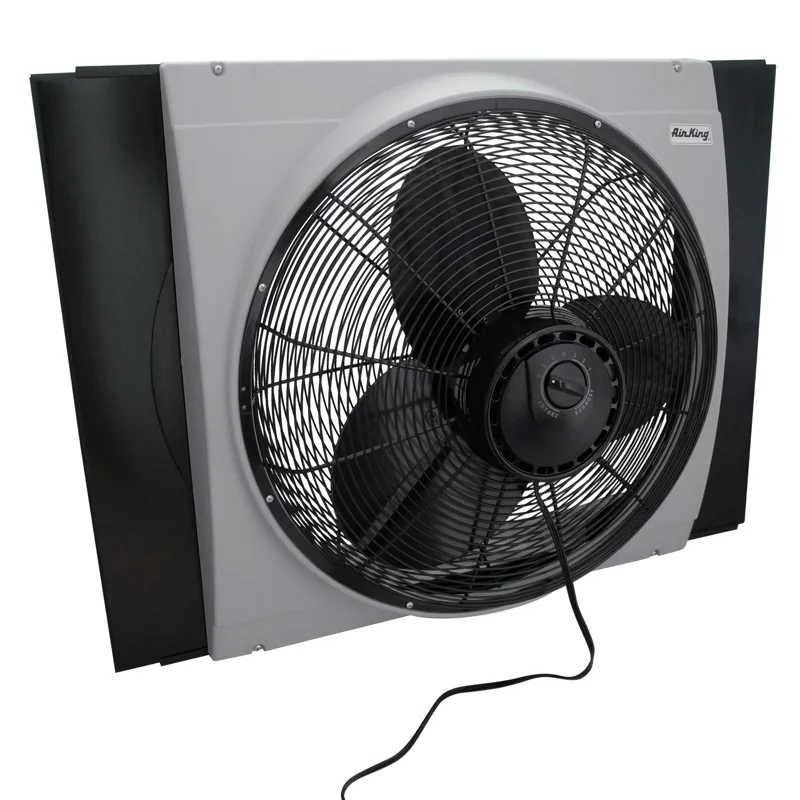
The Air King choice is the larger window-exhaust arrangement here. Compare it with the actual sash opening and the maker's mounting detail. Its whole-house description does not establish how air will move through your rooms. The replacement-air route needs a separate check.
Keep the Storm Guard mounting feature with this exact model's directions. Do not generalize it into weather approval for any fan in a window. The opening must still meet the stated mounting and electrical limits. A useful exhaust position also needs a workable security plan.
Keep in mind: Confirm dimensions, installation scope and suitability with current manufacturer documentation before purchase.
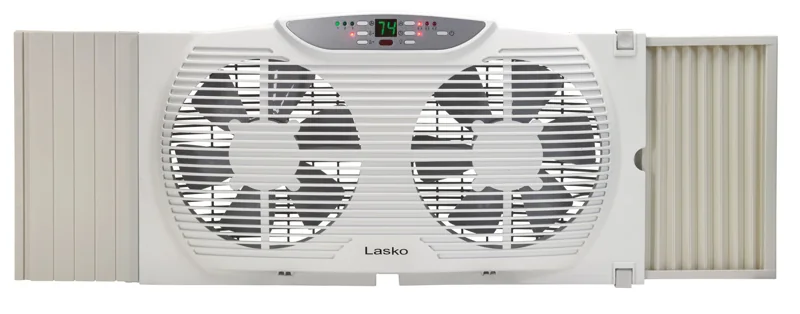
The Lasko W09550 choice offers a reversible window-airflow arrangement. Compare the documented direction controls and the opening it fits. It serves a different mounting task from a ceiling whole-house system. No equal capacity or whole-home coverage is inferred from placing both on a cooling shortlist.
Check how the unit stays secured and how its panels meet the sash. Keep those details with the exact variant. Reversible operation does not remove the need for suitable outdoor air. A warm or smoky outdoor supply can remain unsuitable even when the direction control works correctly.
3. Vornado TRANSOM Window Fan: remote window control
Keep in mind: Confirm dimensions, installation scope and suitability with current manufacturer documentation before purchase.
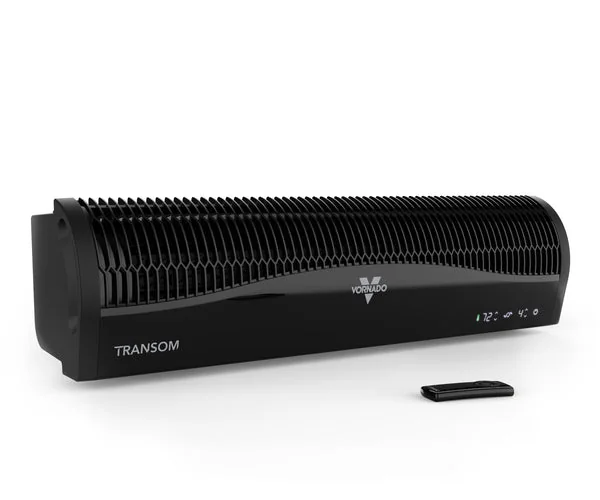
TRANSOM is the window-mounted remote-control option in this comparison. Assess its opening fit before judging the convenience of the control. A remote can change a setting without establishing room coverage or outside-home access. Confirm each function from this model's instructions.
The window and air route should suit the chosen intake or exhaust use. Keep weather warnings and security in the plan. A compact-looking unit is not automatically a fit for a narrow opening. Use the exact measurements and mounting directions rather than dimensions guessed from the photo.
Factors to consider when choosing whole house fan window options
Check how the window locks with the fan in place. The opening must hold the unit as its guide says. A size that fits on paper may still be wrong for the sash. Do not make a bracket to force a fan into a window that cannot hold it safely.
Read the fit range for the exact unit. Check the clear space, rather than the size of the outer frame. Keep any side panels and supplied fixings with their own guide. A similar grille does not prove that two models fit the same opening.
Window fan versus ceiling whole-house fan
A window fan moves air at that opening. A ceiling whole-house fan draws air through rooms to an attic or an outdoor outlet. They use different mounts and air paths. A product with whole house in its name still needs a check against the actual room layout.
Our ceiling fan comparison covers those other layouts. Use it if a window unit does not fit the task. An attic-exhaust fan serves another space again. Do not use its attic-area claim to size a fan for the rooms below.
Whole house fan window coverage and outdoor-air limits
Moving air does not chill or dry it. A hot night can stay too hot. Smoke can make outside air unsafe to draw in. Keep the fan off when outdoor air does not suit the room. Follow the unit's weather and power warnings too.
Check the other exhaust fans in the home. Fuel-burning equipment also needs a safe air supply. A large exhaust fan can change pressure when too little air can enter. Do not close other windows as a safety test. The airflow on a box cannot assess the house.
PNNL's whole-house fan guide explains the room-air path and pressure concerns for ceiling systems. Keep those system types distinct. A window product needs its own fit and use directions. Neither product type gets a whole-home result from its name alone.
How We Picked
We chose a larger exhaust layout and two smaller window units with reverse-flow controls. Their US product records were checked on October 16, 2026. We compare the task and controls. These are not three equal-size whole-home systems.
Verdict: whole house fan window decisions
For whole house fan window choices, start with the opening and air path. Compare Air King for a larger exhaust task. Compare Lasko W09550 for its reverse-flow controls and TRANSOM for its window control layout. Check fit before features. None proves whole-home coverage from the name alone.
FAQ
Does a window fan replace a ceiling whole-house fan?
It can move room air where the window and paths fit. It has a different mount and outlet route. No equal whole-home result is claimed here. Compare the actual task and flow rating. Do not treat a shared name as proof of the same performance.
Do all window fans change direction in the same way?
No. Some use a control to reverse flow. Others need to be turned around. Read the exact model's guide. Check how it stays fixed after a change. Never move its mount while the blades turn. A direction switch is not a way to isolate power for service.
Can I leave a window fan running in rain?
Follow its own weather warnings. A window-use label does not allow every kind of exposure. Air King's Storm Guard has a specific role in its mounting design. It does not give another fan the same feature. Never use a wet power connection or infer weather limits from a photo.
Should I compare the highest advertised CFM?
Use matched test methods for the same task. A window unit and a ceiling system can have different rating conditions. Fit and safe outdoor air come first. A bigger number does not prove lower bills or a quieter room. It also cannot show how air reaches rooms behind closed doors.