A smart attic fan adds sensing and app controls to an exhaust task. Those controls do not diagnose leaks, guarantee savings or make the outlet suitable. Our three choices compare two gable models with one roof unit. Read the exact controller guide before assuming internet access or remote control from outside the home.
Keep in mind: Confirm dimensions, installation scope and suitability with current manufacturer documentation before purchase.
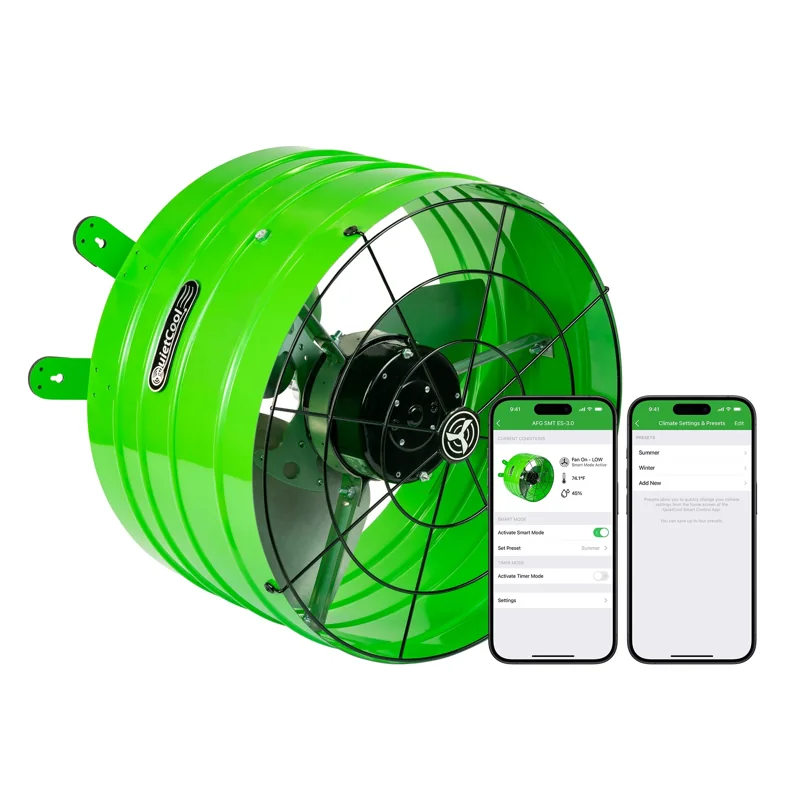
AFG SMT ES-3.0 suits comparison where the gable opening and outdoor intake have already been checked. Its listed speed choices make the operating plan part of the decision. Compare what each state does rather than assume the app automatically selects the right state for every attic.
Keep the exact controller instructions. They should settle the connection method and normal operating controls. A smart label alone does not promise access from outside the house. Choose the package for a documented function you will use, with the physical route established first.
Keep in mind: Confirm dimensions, installation scope and suitability with current manufacturer documentation before purchase.
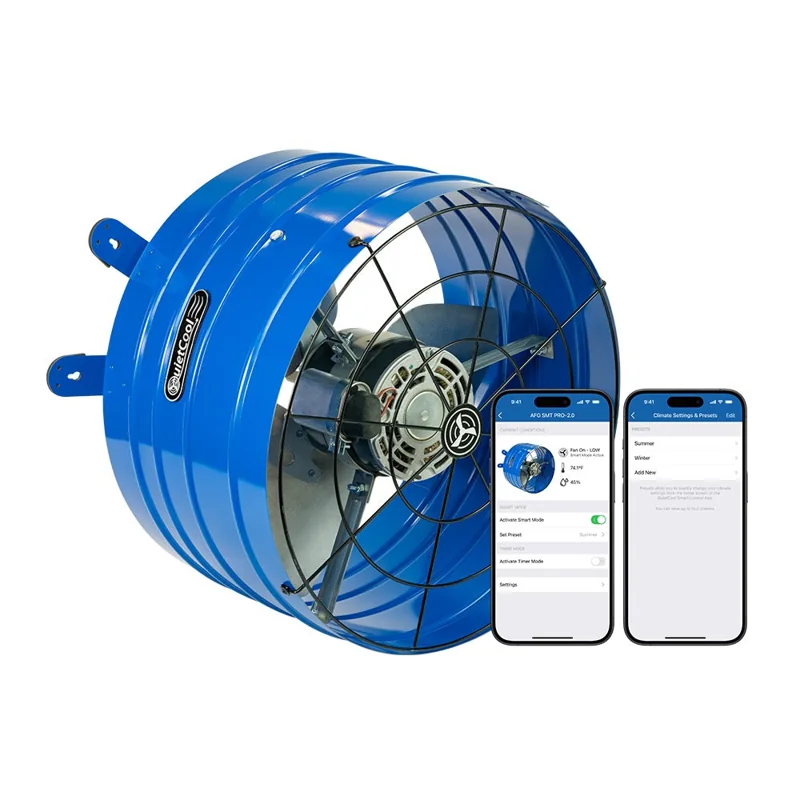
AFG SMT PRO-2.0 provides another gable control package. Compare its actual functions with the task rather than rank it only by the number of settings. The wall opening and louver need to fit regardless of the interface. A nearby outlet does not establish electrical compatibility.
Record how the fan is used when the phone is absent and how it is isolated for service. Those answers belong to the supplied guide. Do not fill them from a similar model's screenshots. A simpler allowed operating plan can be preferable to an assumed feature that this package has not documented.
Keep in mind: Confirm dimensions, installation scope and suitability with current manufacturer documentation before purchase.
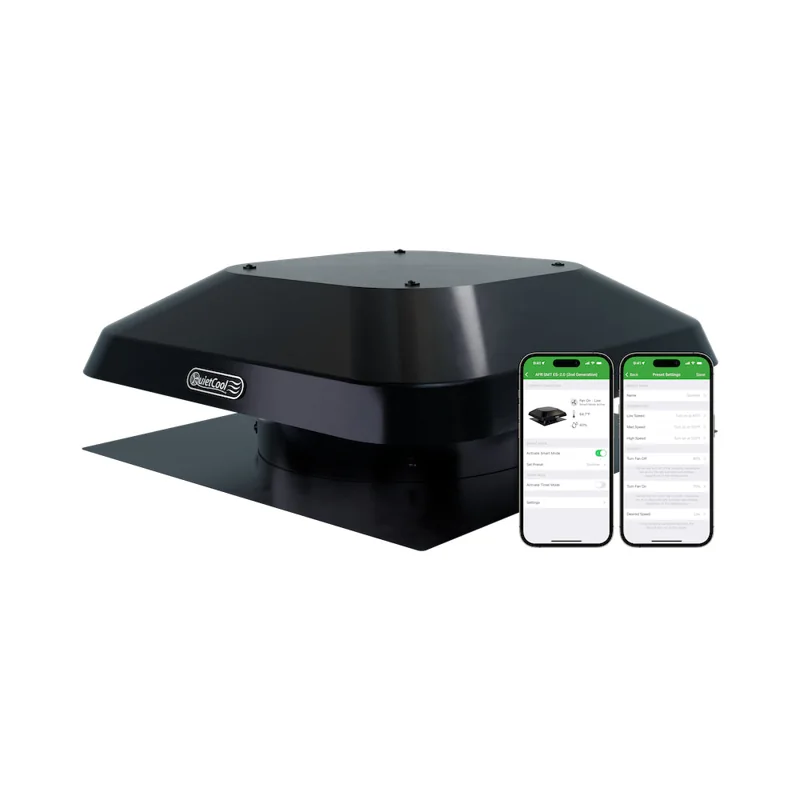
AFR SMT ES-2.0 brings smart controls to the roof-exhaust route. Consider it after confirming the roof material, pitch and weather detail. A useful app cannot remove those requirements. Include future roof access in the cost and maintenance decision before comparing software convenience.
Its sensing can respond to attic conditions, but it cannot diagnose a roof leak or a ceiling air path. Keep the moisture source and control thresholds separate. If roof exhaust is suitable, compare the documented control functions with the gable alternatives without implying they are interchangeable installations.
Factors to consider when choosing a smart attic fan
A smart attic fan adds controls to an attic exhaust task. Start with the roof or gable opening. Check outdoor intake and ceiling air leaks too. Then compare what the exact control package does.
A phone app cannot make the wrong mount fit or show that a fan will cool a hot room.
The AFG options here use a gable route. The AFR option uses a roof opening. This is the first practical choice. If neither route suits the existing building, a richer app is not a reason to force the installation. Use the attic fan comparison before narrowing the controller choice.
Separate sensing from diagnosis
A thermostat responds to a temperature. A humidistat responds to moisture conditions. Neither explains what caused the condition. Water can enter through a roof fault, and indoor moisture can reach the attic through gaps. A controller that starts the fan correctly may still leave that source untouched.
Record the actual problem before choosing a trigger. A stain that appears after rain needs a different investigation from a control that fails to start. Do not increase runtime until the cause is clear. The attic ventilation problems guide helps define the building questions.
Check the exact connection method
Read the selected controller guide. A smart label does not prove Wi-Fi, internet access or control from another location. A local phone connection and a remote internet connection have different requirements. Keep an unknown feature marked unknown rather than fill it from the behavior of another smart appliance.
Check which phones and software the guide supports. Find out how to use the fan without a phone. Check for any extra part the system needs. An app photo does not show all the hardware in the box. Keep the full fan model and control version together.
Compare speed states fairly
Keep the flow and input power for the same setting together. A low-power state is not the maximum-flow state unless the source says so. Do not use a pair of favorable numbers from different modes to imply a result the fan never provides. The building plan needs to suit every state the chosen control can call for.
Extra speed choices can help match an allowed operating plan. They do not justify a smaller intake by assumption. Read the exact fan directions and keep the stated intake needs with the model. A generic passive-vent worksheet does not replace a powered fan's requirements.
Smart attic fan controls in everyday use
The person who uses the fan needs a clear normal routine. The person who services it needs safe isolation information. These are different tasks. An app's stopped state is not proof that the motor cannot start. Keep the supplied operating and service directions available inside the house.
Ask what happens without the phone
Check how the fan works without the normal phone. A new phone may need setup again. Do not assume a second phone will inherit the settings. Keep any required pairing or account instructions with the product record. Confirm sharing and remote-access functions from the exact guide.
The right choice can depend on who actually uses the home. A control that suits the buyer may confuse someone arranging later service. Make the ordinary on, off and mode controls clear at handover. Avoid relying on a remembered app screen as the only record of how the installed system works.
Keep power interruption behavior explicit
Find the guide's description of behavior after the supply returns. Record the restored mode or leave it unresolved if the guide does not specify one. Do not infer it from a different controller in the same brand family. A fan that can restart must be treated accordingly during service.
If a fault or interruption occurs, note the displayed state and symptoms from a safe place. Do not repeatedly reset a tripping circuit or open the controller to experiment. The exact fan and control information should lead diagnosis. A connection failure alone does not prove that the motor has failed.
Keep settings with their purpose
Write down why each chosen mode is used. A threshold copied from a neighbor's attic has no stated link to this roof design. Use the thermostat setting guide for the decision process. The exact product directions still govern the permitted control range and installation.
A humidity response should not be described as mold treatment. A temperature response should not be described as a guaranteed room-cooling result. The controller can respond to a reading without verifying either outcome. Keep the building repair and normal fan settings separate in the work record.
Building fit comes before automation
Check whether the attic is vented and where outdoor air is meant to enter. Identify ceiling leaks and any combustion equipment concerns before relying on powered exhaust. PNNL's attic fan guidance gives the building-science context. The controller's convenience does not settle those conditions.
Match the mounting and supply
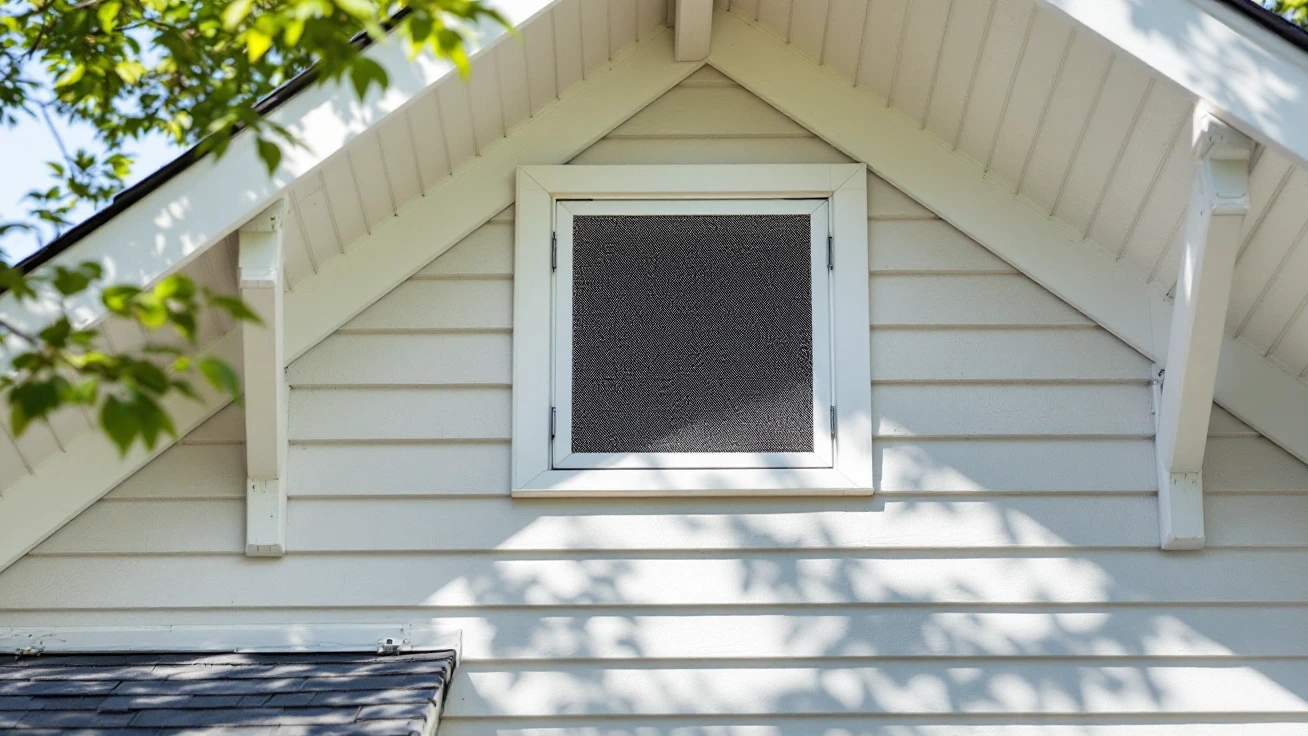
A gable unit needs a compatible wall opening and louver. For a roof unit, check the covering and pitch. Settle the weather detail too. Use the exact model's directions. An old opening or nearby outlet does not establish that the new unit will fit.
Include the controller and supply work in the quote. Allow for safe service access too. A plug-in package may still need building or outlet changes. Convenient controls do not remove those parts of the work. Check what each package and quote includes.
Compare the full cost without inventing savings
Record equipment and mounting as separate scope items. List electrical work and intake changes too. Keep unknown labor or hidden repairs marked as unknown. Do not justify a smart-control premium with an unproven household saving. Lower input in one state does not show a lower total heating or cooling bill.
Ask what the feature solves for you. An allowed schedule or clear local control may be useful on its own. That is a practical reason to compare packages. It does not need an invented payback period. Record the useful function and its limits, then judge the complete job against the alternative.
Keep sound as a separate evidence question
A controller can select an operating state, but its app is not a sound test. A low setting should be compared with its own flow and rating basis. If room sound is the deciding factor, use the quiet attic fan guide. It explains why mounting and matched measurements matter.
Match the control to a real use case
Write down what you want to do before comparing a menu of features. For example, you may want to check the fan from a room below. That is a different task from checking it while away from home. Confirm the required connection for the actual task. Do not pay for an assumed function because an app screen looks familiar.
Checking the fan from another room
Find out whether the documented connection can serve that location. Walls and distance can affect a local connection. A successful setup beside the control does not show that every room is in range. Retain a normal control method that the supplied guide allows. The person using the fan should know how to tell a connection problem from a stopped motor.
Leaving the house for a trip
If you need access from elsewhere, check the exact guide for that function. A local radio link alone cannot establish internet access. Find out what hardware or service the documented feature needs. Keep any missing requirement open in the comparison. Do not assume another product in the same brand provides proof for this one.
Sharing the home with other users
Choose a normal routine that the people in the house can follow. Check what happens if the person who paired the phone is absent. Keep the permitted manual controls clear. Store the guide inside the home, where it does not require attic access to read. A useful handover should explain ordinary use without inviting anyone to open an electrical control.
These examples help define a requirement. They are not claims that each fan supports every scenario. Compare the exact package with your chosen task, then leave unsupported features unresolved.
How We Picked
We checked these US catalog records on October 16, 2026. They show gable and roof routes with different speeds and controls. We use published facts. The mounting task comes first; unsupported functions stay unresolved.
The word smart is not proof of a feature absent from the guide.
Verdict: choose the smart attic fan control after the air path
Choose a smart attic fan by its compatible mount and complete control guide. Compare the two gable options where that wall route fits, or the roof unit where roof exhaust fits. Confirm normal local use, connection limits and service isolation. Convenient controls do not replace intake, ceiling sealing or a clear reason for powered exhaust.
FAQ
Does smart mean I can control it away from home?
No such function is inferred from the label. Check the exact connection method and controller instructions. A local phone connection is different from an internet service. Leave remote access unresolved until the package's documentation confirms it, including any required accessory or account.
Can a humidity control fix condensation?
It responds to a condition without finding its cause. Roof leaks, ceiling air leaks and exhaust ducts ending in the attic need their own checks. Identify the source before treating extra runtime as the remedy. A running motor is not evidence that a moisture fault has been repaired.
Will an efficient motor pay for the smart upgrade?
No payback is calculated here. It needs the full added cost and a supported change in household energy use. Keep each flow and power value with its own speed. A product rating alone cannot establish the savings for the installed system or the building's cooling bill.
What should be retained after installation?
Keep the exact fan and control model, supplied directions, chosen settings, connection instructions and service record. Include intake and mounting details. Record anything still unresolved. That information helps a later user or service visit work from the installed package rather than a similar product shown online.