Choose the gable or roof route first. Compare matched sound evidence and speed, then check mounting vibration and intake. No measured quietest model is established.
A quiet attic fan choice starts with the sound path, operating speed and mounting. A quiet label is not a matched test in the rooms below. These three QuietCool options give different gable and roof layouts. We compare published features and explain the limits of sound claims. No measured quietest model is declared.
Keep in mind: Confirm dimensions, installation scope and suitability with current manufacturer documentation before purchase.
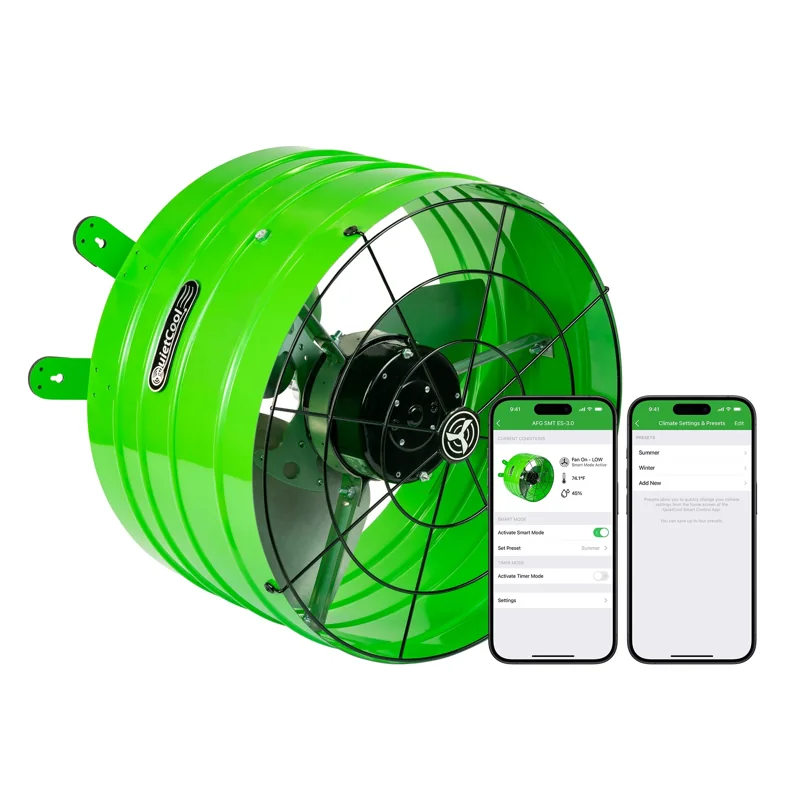
AFG SMT ES-3.0 belongs on the gable shortlist where a wall exhaust route fits. Its listed speed choices provide different states to compare. They are not a measured sound result in the rooms below. Keep flow and power with the selected state. Record the control settings used for that state as well.
Check the louver and mounting arrangement before choosing it for a noise complaint. A new motor can leave a loose support or wind-driven louver untouched. No matched room-sound evidence ranks this fan ahead of the other two. Its useful distinction here is the documented gable and speed package.
Keep in mind: Confirm dimensions, installation scope and suitability with current manufacturer documentation before purchase.
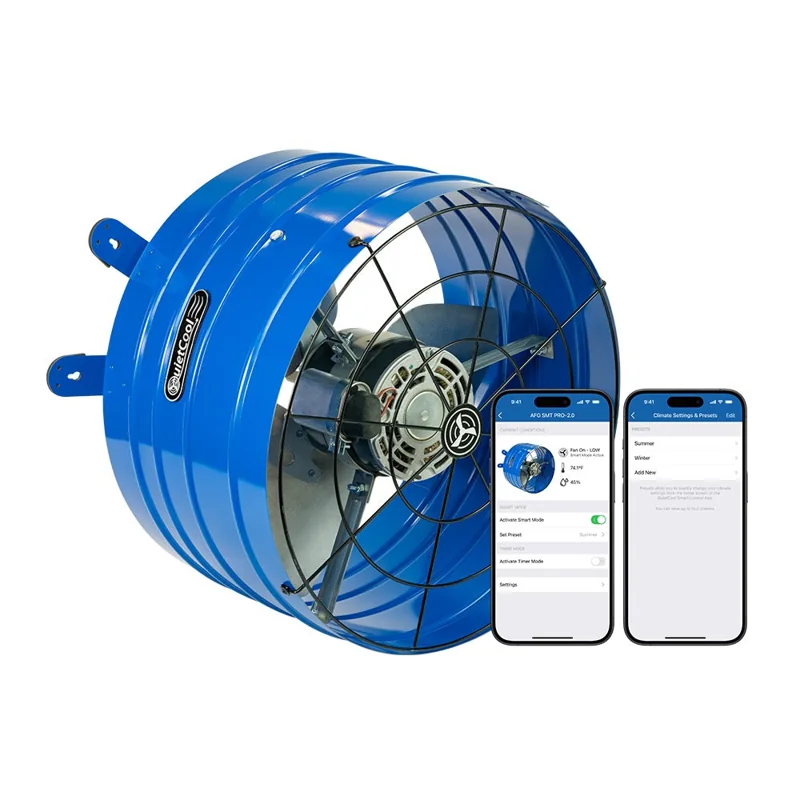
AFG SMT PRO-2.0 is the other smart gable arrangement. Compare its supplied control and speed package with the actual exhaust task. It is not simply a cheaper version of a sound result established for another model. Shared brand names do not make operating states or measurements interchangeable.
This option still needs a suitable support, louver and outdoor intake. If the existing complaint comes from a mounting fault, include that repair in the scope. A control change cannot establish that the physical sound path has been corrected. Judge the full work rather than the equipment alone.
Keep in mind: Confirm dimensions, installation scope and suitability with current manufacturer documentation before purchase.
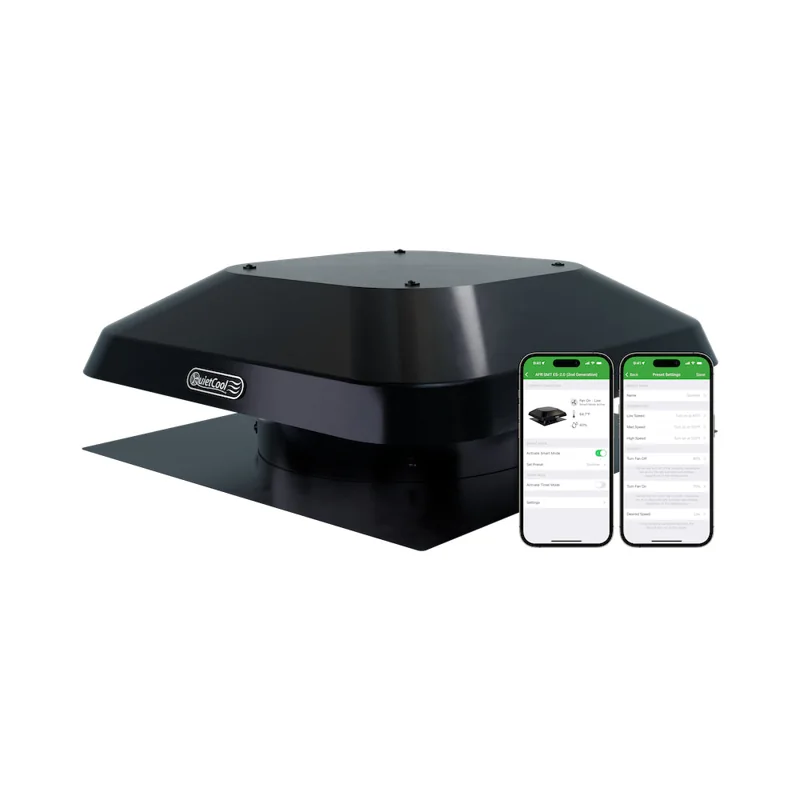
AFR SMT ES-2.0 changes the installation to a roof route. Compare it where roof exhaust has been selected for building reasons. That choice adds roof-covering, flashing and service-access checks. It should not be made solely on an assumption that a roof position is farther from the bedroom.
Keep its own controller guide and mounting detail with the comparison. The roof assembly can carry sound, and no universal room-noise advantage follows from this mounting label. A suitable roof arrangement and documented operating plan are stronger reasons to choose it than an unsupported claim that it is the quietest.
Factors to consider when choosing a quiet attic fan
A quiet attic fan is a complete installation choice. The motor and its speed matter, as do the mount and path to the room. A product name cannot tell you how the fan will sound above your bedroom. Start where sound would be a problem. Then compare the exact fan and operating state.
The three picks separate two gable options from a roof option. They are not a measured sound ranking. No shared installed-room test was found for this comparison. The order helps you compare the mounting and control choices. It does not declare that the first fan will be the quietest in your house.
Decide whether attic exhaust is the right task
An attic exhaust fan moves air from the attic outdoors. It needs a suitable outdoor intake route. A whole-house cooling fan draws air through rooms and open windows. Those are different systems, even when both have a motor in the attic. A low sound label does not make one a substitute for the other.
If the goal is a cool bedroom at night, first decide which air path you need. Read the whole-house fan comparison for room-air cooling options. This page concerns attic exhaust. Do not buy an attic fan on the assumption that its location alone will give the room a useful supply of outdoor air.
The building also needs a reason for powered attic exhaust. A hot attic reading alone does not prove a fault. PNNL's attic fan guidance sets out the pressure and ceiling-leak concerns. Check the roof design and existing intake before making sound level the deciding feature of a new motor.
Compare sound evidence on the same basis
A useful sound figure needs a unit and a stated test method. It also needs a fan setting and measurement position. A number taken near a motor cannot be compared fairly with one taken in a room below. Ask what the figure describes before using it to rank two products.
Do not convert an unsupported sound claim into a promise about sleep. The room's ceiling, fan position and structure can change what is heard. An open attic hatch creates another route. A related model's test is not evidence for this exact package unless the source shows why it applies.
Keep missing data visible. A blank sound field means the comparison is unresolved. It does not mean silence. It also does not show that a competing fan is louder. The sensible choice may depend on a suitable mounting location and a clear return option rather than a ranking the available evidence cannot support.
Keep each speed with its own rating
A multi-speed fan has more than one operating state. Keep the stated flow and power with the speed that produced them. Do not place a low-input figure beside the highest airflow as if the two were a matched result. A useful comparison names the same state in every field.
The low setting must still suit the intended exhaust task. Choosing a fan for its lower mode is not a way to ignore the required intake. The higher mode may also run under the chosen control settings. Plan for the states that can occur, rather than compare only the one that looks best on paper.
Do not fit an unrelated speed control to force a lower setting. Motor and controller compatibility belongs to the exact guide. An unsuitable control can create a fault instead of solving noise. Check which settings the supplied package supports. Keep electrical changes outside a trial-and-error sound experiment.
Find the sound path before replacing the fan
An existing noise deserves a cause check. A rattle when the fan is off may come from wind at a louver. A sound that starts with the motor raises different questions. A low hum in the room can have a different route from a scrape heard near the attic opening. Record the pattern without approaching moving parts.
Our attic fan noise guide helps organize those safe observations. It does not turn a recording into a bearing diagnosis. Use it to describe the problem clearly. A service scope should identify the source before a new complete fan is presented as the only remedy.
Note when and where it is heard
Write down whether the sound occurs at start, during steady use or after stopping. Note the selected speed and control mode. Check from normal occupied areas. There is no need to enter the attic or climb onto a roof to make that record. Stop using a fan with severe vibration or signs of electrical heat.
Name the affected room. A fan above a hall may still be heard through a shared wall or ceiling. Record whether doors and the attic hatch were open. These details help explain why two casual phone recordings are not a controlled comparison. They can still help define the service visit.
Avoid repeating a hazardous condition to obtain a better clip. Smoke or a burning smell calls for the appropriate safety response. Repeated circuit trips need attention too. Do not hold a loose panel while the fan runs or push on a guard. A stopped remote display does not establish safe isolation for service.
Separate a mount problem from a model choice
A loose fixing or damaged housing calls for inspection. A new fan may need the same mount repaired. Replacing the motor without addressing the support leaves that part of the problem open. Ask the work scope to distinguish the equipment fault from the mounting work. Keep both with the exact model record.
Do not pack soft material around an assembly to see if the noise changes. It may block airflow, shift a guard or interfere with required clearances. Use only the mounting and isolation details allowed for that unit. The material that looks quiet in a picture may be wrong for the roof or motor arrangement.
An older installation may contain changes absent from its original guide. List any reused brackets and the control. Identify the louver too. A familiar brand name does not approve those parts for a new fan. Confirm the full assembly before calling a replacement a direct fit.
Keep wind noise and operating noise separate
A louver can move when the motor is off. Wind direction can change what is heard. That pattern differs from noise that follows a speed command. Record each separately rather than combine them into one complaint. A service person can then check whether the proposed work addresses both conditions.
Do not close or obstruct the outlet to test whether the sound stops. The fan needs its designed route. A blocked outlet can change its operation and create another problem. Safe observations are useful; altering the air path while the fan runs is not a sound-measurement method.
If the complaint began after roof or insulation work, record that timing. Something may have changed near the inlet or support. The timing alone does not prove the cause. It gives the inspection a sensible starting point. Keep invoices and earlier photos where they can help identify what was fitted before the change.
Gable and roof mounting change the comparison
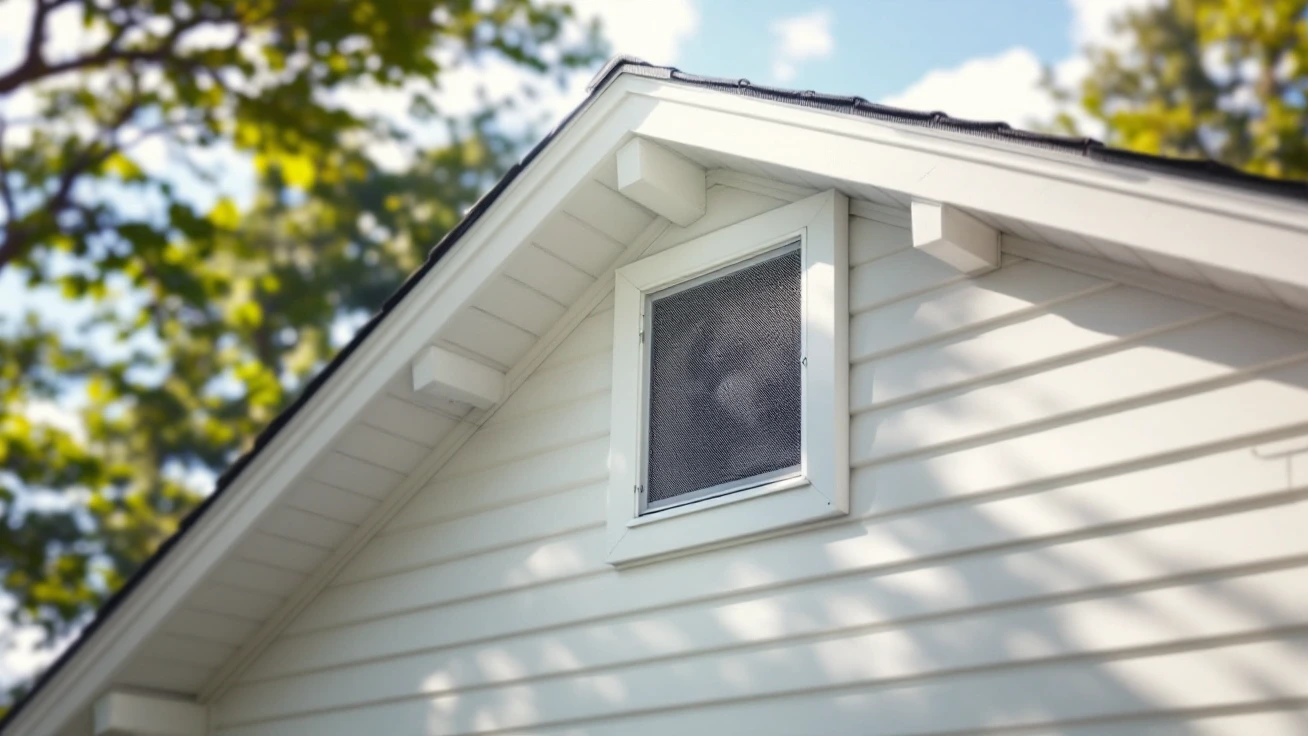
The two AFG picks use a gable exhaust route. The AFR pick uses a roof route. Choose between those building arrangements before choosing an app feature. A quieter motor cannot make an unsuitable opening weatherproof. Nor can a roof unit solve a missing intake route simply by being positioned higher.
For the full mounting comparison, use the best attic fan guide. Keep this page's sound questions beside that building decision. Buying a different mounting type may add roof or wall work. Include that work when judging whether a possible sound benefit is worth the change.
Gable placement and the rooms below
Find the existing wall opening and the support arrangement. Identify the louver and how it is meant to work with the fan. Do not assume that every opening of a similar size suits the new unit. The exact guide should settle the mounting detail and clearances. Keep access to the unit in the plan.
Consider which room shares that end of the house. Moving the fan farther from one room can put it nearer another. The structure may carry sound along a route that is not obvious from floor distance. No fixed setback from a bedroom is promised here. The actual building layout needs to inform the choice.
A plug-in package still needs a suitable supply. The presence of a nearby outlet is not proof of fit. Do not run an improvised lead through an attic opening to try a proposed location. Plan the power and mount together. Normal control should be easy to use without creating unsafe service access.
Roof placement and weather work
A roof unit adds a weather-sealed opening. Check the allowed roof covering and pitch for the exact model. Compare the flashing and access scope before comparing the smart controls. A previous fan at that location does not prove the roof detail suits a replacement. Damage around the old housing needs its own assessment.
The hood, roof deck and fixings form part of the sound path. A new motor alone may not address a loose roof component. Ask which parts are being replaced and which will remain. Do not treat a sound complaint as evidence that the whole roof fan is beyond repair. The cause should lead the scope.
Use the roof-mount comparison when that route fits the building. It keeps roof work and control choices together. A fan selected for a roof task should still have its own intake check. A general roof-vent rule does not replace the model's powered-exhaust directions.
Service access can decide the practical choice
Think beyond the first installation. A control fault may require access near the motor. A small part can still be costly to reach safely. Keep the expected access route with the purchase decision. A model with more functions is less useful if the owner cannot identify its controls or arrange safe service later.
Store the guide in an accessible place inside the house. Keep the full model suffix and controller version. Record changes when parts are replaced. A label on the unit can be hard to read from a safe position. An indoor record helps avoid guesses before the next visit or replacement order.
Intake, ceiling leaks and controls still matter
Quiet operation is only one condition for a useful attic-exhaust system. The outdoor inlet and ceiling air boundary remain part of the plan. Do not solve a sound complaint by covering the inlet or outlet. Ask whether the proposed fan and its allowed speeds suit the real air path. Resolve any unknowns before use.
Check vent free area with the right records
An inlet's outer size is not its net free area. Screens and louvers take up space. Use the vent maker's documented value where it is known. Keep an unknown vent rating marked unknown. A guess based on the grille's face can give false confidence that the fan has enough replacement air.
Check the route behind the inlet too. Insulation or later work can block a path even when the outside grille looks clear. The total also needs to serve the attic section where the fan sits. Separate roof wings or partitions can matter. A whole-roof total does not prove that air reaches the selected opening.
The attic ventilation overview explains the broader layout. Use the exact fan guide for its powered-exhaust needs. Do not swap a passive vent ratio into the fan's requirements because both mention free area. They describe different parts of the design. Keep the source and scope beside each value.
Air sealing is a separate building task
Ceiling leaks can connect rooms with attic pressure. A low-input motor does not close those gaps. If the attic fan is drawing room air through the ceiling, quieter equipment does not settle the underlying path. Include the ceiling boundary in the assessment rather than assume new outdoor vents answer every concern.
Keep safe clearances around hot fixtures and vent pipes. A shopping guide cannot specify one sealing product for every penetration. The assembly and exact equipment directions need to govern that detail. Record what requires inspection. Do not bury an unresolved electrical or heat-clearance concern beneath insulation while trying to make the room quieter.
Fuel-burning equipment adds a separate pressure concern. Do not use a running fan as a test for fumes. Follow the relevant safety response to signs of combustion gases. Our attic fan safety guide helps identify the questions that should be resolved before normal operation resumes.
A thermostat does not diagnose a hot room
A thermostat responds to temperature at its sensor. That can govern fan operation. It does not establish that a bedroom needs attic exhaust or that the fan lowered a cooling bill. Choose the trigger after deciding the intended task. Do not use a setting copied from another attic as proof that the system is right.
If nighttime sound is the complaint, record whether the control actually calls for operation then. A new control plan may be part of the solution. It still needs to suit the building and the exact unit. Do not disconnect a control or defeat an allowed function just to reduce sound at a convenient hour.
A humidistat responds to moisture conditions. It cannot identify a roof leak or a duct that terminates in the attic. Those faults need their own remedy. Keep the cause check separate from the threshold setting. A motor that starts as expected may still be responding to a problem that more exhaust cannot fix.
Smart functions need an exact guide
Read the connection requirements before buying for phone control. An app does not automatically mean internet access from outside the house. Check normal local control and what happens if the phone is absent. Keep those questions with the controller's version. Do not infer them from another smart product using a similar screen.
Ask which setting is restored after a power interruption. If the guide does not answer, retain that uncertainty. A fan that can restart needs an appropriate service isolation method regardless of what the app displays. The person arranging service should have the operating record. The person using the room should know the normal control method.
Use the smart attic fan comparison when control behavior is the main choice. Sound and control overlap in daily use, but they remain different evidence questions. A feature-rich app is not a sound test. A published sound rating does not document what a controller does after losing power.
Build a useful quiet-fan comparison record
A short record helps prevent unmatched claims from deciding the purchase. Name the target room and the intended exhaust task first. List the physical opening and outdoor intake. Then put the exact fan and control beside their source documents. Leave a field blank when it has no verified answer instead of borrowing from a related model.
Write the requirement in room terms
Describe the problem the user wants solved. For example, a motor hum during evening use is a clearer requirement than a request for the quietest fan. State when the room is used and which sound is intrusive. Do not attach an invented acceptable sound threshold. Use the owner's real need to guide the evidence request.
Separate that need from the attic's ventilation task. The best answer may involve a repaired mount, a different allowed operating plan or building work. A new motor is one possible part of the scope. It should not be the default answer before the current fault and air path have been understood.
Compare the full work scope
Ask for a written scope naming the unit and controller. Include the mount and any louver or roof work. Record the intake check and service access. State which old parts remain. A low hardware price cannot compare a gable replacement with a new roof opening; those are different jobs even with similar listed airflow.
Keep labor, electrical work and hidden repairs explicit when they are unknown. Do not enter zero for an item simply because it is absent from the equipment listing. Sound-related work may overlap with a necessary repair. The quote should show that relationship. It should also state what evidence will be retained at handover.
Check the result without claiming a laboratory test
After proper completion, confirm the documented controls and normal operation from occupied spaces. Note whether the original complaint remains. That is a useful handover observation. It is not a controlled comparison with another fan. Do not turn a casual before-and-after recording into an unsupported reduction figure or a claim that every similar room will behave the same.
Keep the selected operating state with the observation. A fan heard on a lower setting has not passed a highest-speed sound check. If the result is unsatisfactory, use the agreed service or return route. Do not alter the mount or guard on an improvised second attempt. Leave wiring changes to the proper electrical scope.
Questions to settle before placing the order
Use the actual installation facts to narrow the shortlist. The right answer can be a suitable gable package, a roof package or a repair to the existing system. An unresolved sound claim should stay unresolved. It should not be replaced by a confident recommendation based only on the words quiet or smart.
What evidence would change the choice?
Name the missing fact that matters most. For roof fit, seek the exact roof detail. A control question needs the matching controller guide. For sound in the room, ask for a relevant test basis. Keep the search tied to a decision instead of collecting more unrelated specifications that cannot settle the original question.
Do not let one well-documented field hide another missing one. A clear motor rating does not settle louver fit. A clear mounting drawing does not settle a sound comparison. Keep each requirement separate until it is answered. The product that has the longest list is not automatically the one that resolves the house's most important condition.
What happens if the sound remains intrusive?
Read the actual seller's current return and warranty terms before buying. This page gives no promise that an installed unit can be returned or that labor is covered. Installation can change the practical options. Keep any agreed process in writing and distinguish a product defect from a normal sound result the buyer dislikes.
Ask how an unresolved installation fault would be handled too. A loose support and an unsuitable sound expectation need different responses. The written work scope should identify the original complaint and the proposed remedy. That gives the later discussion a concrete basis if the result is disappointing, rather than relying on a general claim that the fan was sold as quiet.
Which records should pass to the next owner?
Keep the exact unit and controller with their model guides in the home records. Include the intended intake route and allowed operating states. State whether any sound measurement was actually made. A favorable personal impression should not become a certified rating when the property changes hands.
Update the record after service or roof work. The installed arrangement can change even when the visible grille does not. A replacement controller or support detail may affect how the unit runs. Retaining that history helps the next service visit work from the current system rather than an old shopping comparison.
How We Picked
We selected current US catalog variants with different mounting routes and speed choices. The product records were checked on October 16, 2026. Our comparison uses published features and building-fit questions. No listed option is declared a measured quietest fan, and no power figure is converted into a household saving.
Verdict: choose a quiet attic fan by the complete installation
Choose a quiet attic fan once the mounting route and intake are clear. Define the sound complaint too. Compare the gable choices where that wall route fits, or the roof choice where roof exhaust fits. Keep speed and sound evidence together. An unsupported quiet label should not outweigh a known building-fit problem.
FAQ
Which of these fans is the quietest?
No matched installed-room result supports that ranking here. The three choices differ in mounting and control arrangements. Compare the exact operating state and test basis before ranking sound figures. Where those data are missing, keep the sound result unresolved and judge physical fit before convenience features.
Will the lowest speed always solve noise?
It may change what is heard, but it must be an allowed state that still suits the intended task. A mount fault can remain at any speed. Do not fit an unrelated controller or restrict a vent to force quieter operation. Check the fault and the exact guide before changing the operating plan.
Can I place insulation around the motor?
Do not use insulation as an improvised sound wrap. It can interfere with airflow, moving parts or required clearances. Follow the exact mounting and clearance directions. If sound treatment is proposed, its compatibility with the full assembly needs to be established before anything is placed near the fan.
Is a roof fan quieter than a gable fan?
The mounting position alone cannot establish that. Roof and wall assemblies can transmit sound through different paths. Compare the actual room layout and any matched sound evidence. Choose the suitable exhaust route first, then assess sound rather than assuming a universal winner from the mounting label.
Should a new noise lead straight to replacement?
No. Record safe observations and have the fault identified. A loose mount or louver may need repair rather than a new motor. Stop use for severe vibration or signs of electrical heat. Smoke also calls for the appropriate safety response; do not reproduce an unsafe fault simply to decide which new fan to buy.