Compare the roof thermostat unit with EZ Cool gable exhaust. The dual-control package has conflicting mounting descriptions; confirm its full model before purchase.
A Master Flow attic fan exhausts attic air. Compare the thermostat roof unit with EZ Cool for a suitable gable. The third package adds humidity sensing, but its catalog gives conflicting mounting descriptions. Confirm that full model before purchase. Keep current variants separate from older ERV and EGV sheets.
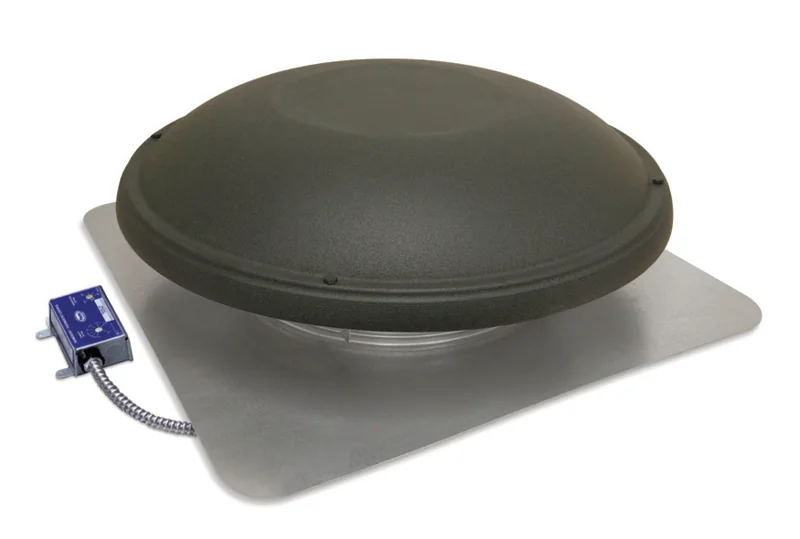
1. Master Flow Roof Fan with Thermostat: standard roof exhaust
Keep in mind: Confirm dimensions, installation scope and suitability with current manufacturer documentation before purchase.
This Master Flow roof unit is the thermostat arrangement here. Compare it where roof exhaust suits the assessed attic. Check its stated roof-material limits before capacity. An existing opening needs inspection against the new housing and weather detail.
A thermostat supplies a trigger rather than a diagnosis of heat or moisture. Keep intake and ceiling leakage in the building assessment. If the old unit leaks around its housing, include that roof repair. A working new motor does not settle an unrelated weather fault.
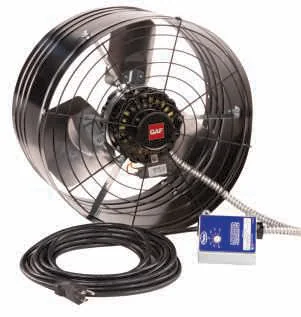
2. Master Flow EZ Cool Gable Fan: plug-in gable exhaust
Keep in mind: Confirm dimensions, installation scope and suitability with current manufacturer documentation before purchase.
EZ Cool changes the installation to a gable route. Consider it where the wall opening and louver arrangement suit the house. Its prewired package does not establish that an existing outlet is appropriate. Include the supply check in the scope.
This is a mounting choice before it is a convenience choice. A gable unit is not a direct replacement for an unknown roof assembly. Compare the complete wall and intake work with the roof alternatives. Leave unsupported room-cooling or savings claims outside that decision.
Keep in mind: Confirm dimensions, installation scope and suitability with current manufacturer documentation before purchase.
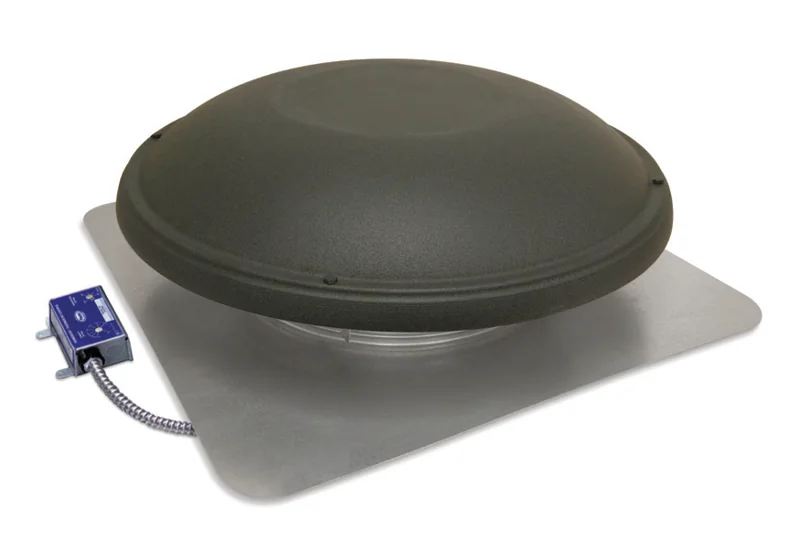
The dual-control option adds a thermostat and humidistat. Its catalog title calls it a roof unit, while some features call it a gable unit. We leave that conflict unresolved. Confirm the full model and its own mounting guide before purchase.
A humidity response does not find the source of a roof stain or ceiling air leak. That source needs its own remedy. Compare the controls only after the physical fit is clear. A related thermostat-only drawing cannot settle an unanswered field for this package.
Factors to consider when choosing a Master Flow attic fan
The roof and gable outlet paths differ. Read the relevant installation guide and the intake bulletin together. Do not blend airflow from one model with intake from another to make a package appear easier to fit. The exact model suffix matters even within the same brand.
Net free area is usable open area. A grille face has a larger gross area. Use the stated rating and check that insulation or dirt does not block the passage behind it. The vent reference explains how to record that area without inventing an open-area percentage.
Master Flow attic fan controls and review limits
A thermostat responds to heat at its sensor. A humidistat has a separate moisture response. Their functions do not establish that the attic is safe or that dampness is caused by too little exhaust. Identify the source of moisture before choosing a new control.
Read the current maker's warranty for the exact supplied model. Keep it separate from the work quote. Check whether future access and labor are covered. Treat roof damage as a separate question. Do not assume that a short retail summary answers each of those points.
This is published-data selection. There is no sound test, savings study or product rating from this site. The equipment records name the exact source. The main attic fan comparison shows other layouts where a different control or mounting route may suit the job.
Keep a model record for future service
Read the complete model suffix
A similar housing does not establish the supplied controller. The roof thermostat unit and dual-control package have different sensing descriptions. The latter's catalog also mixes roof and gable wording. Do not settle its mounting from that listing alone. Keep the full model and its own fitting guide with the quote.
Do not select a roof installation sheet because the brand name matches.
If the retail title lacks the full model, check the package label and maker's guide. Do this before planning the work. A short listing can leave out roof, wiring or control details. Mark those gaps as unknown. Do not fill them from another model's sheet.
Compare a complete scope
A roof option may need work on the opening and weather seal. The supply and control need a plan too. A gable unit uses a wall opening, louver and support instead. Include safe access and later service in both quotes. Equipment alone cannot show which full job costs less for your house.
Ask which existing vents remain active after the installation. Nearby openings can change the source of replacement air. The scope should explain the intended inlet-to-outlet route. It should not assume that adding a motor to every available opening improves the system, or that a spinning fan proves the attic is being ventilated as intended.
Keep the full model with the receipt. Store its guide where you can reach it from the house. If a control or motor is changed, add the matched part to that record. Do not assume a later repair leaves the original unit unchanged.
A clear record helps separate the fan's history from a new fault.
The roof and vent plan should be kept too. A later roof job may change an opening or block a path. Tell the roofer which fan is fitted and where its outdoor intake comes from. Check those paths again at handover.
A fan that still spins can have a different air route after building work.
Installation and safety limitations
Powered attic exhaust can lower attic pressure. If the ceiling leaks, air from the house can enter that space. PNNL describes this concern and generally favors passive ventilation in many cases. Check the building before selecting powered exhaust.
Do not service a fan just because it is not spinning. A control may start it automatically. Keep clear of blades and exposed wiring. Follow the complete isolation procedure and use safe access.
Our danger guide lists signs that call for shutdown rather than more testing.
How We Picked
We checked the three exact US catalog records on October 16, 2026. They compare a roof thermostat unit with a plug-in gable unit and a dual-control package. The last record has conflicting mounting text, which we flag rather than resolve by guesswork. We do not use old ERV5 or EGV5 intake figures for these picks.
Match the full model on the box to its own fitting guide. Use that guide when planning intake.
Verdict: Master Flow attic fan decisions
Choose a Master Flow attic fan by its mounting route and control needs. Compare the roof thermostat unit with EZ Cool gable exhaust. The dual-control package needs its mounting resolved before purchase. Keep each full model with its own intake and fitting guide.
FAQ
Are all Master Flow fans whole-house fans?
No. The roof and gable models here exhaust attic air. A whole-house fan pulls air through occupied rooms and needs safe window intake. The shared brand does not make those air paths the same.
Identify the intended job before comparing capacities or installation quotes.
Does the highest CFM model win?
No. Higher published flow needs a suitable intake and outlet path. It may also change mounting and sound. Match the exact model to the building.
A capacity label is not evidence that the fan will lower room temperature or electricity costs in your home.
Can I reuse my old thermostat?
Only if the exact fan and control requirements permit it. A similar switch can have a different motor-load rating or function. Have compatibility confirmed in the electrical scope. Do not bypass a control to test whether the replacement motor will run.
What if passive ventilation is enough?
Then powered exhaust may be unnecessary. First check the roof assembly and existing vents. Ceiling air sealing and clear intake can be more relevant than another motor. Our attic ventilation guide helps separate those building tasks from product selection.