
Attic fans
Attic fan repair
The short answer
Attic fan repair should start with the exact model and a safe diagnosis. A fan may not run due to a control issue. A supply fault can also cause this.
Last updated October 2026
What's covered14
- Attic fan repair: identify what failed
- Stop conditions before diagnosis
- A fan that does not run
- A hum, failed start or repeated stop
- Noise faults
- Water near the fan
- Control and sensor faults
- Attic fan repair and the replacement-air path
- What a useful diagnosis contains
- Repair versus replacement
- Parts and warranty records
- Return to service
- FAQ
- Verdict
Attic fan repair should start with the exact model and a safe diagnosis. A fan may not run due to a control issue. A supply fault can also cause this.
Noise can come from mounting as well as the motor. Do not reach near the blade or test live wires. Keep the system off if there is damage or an unexplained burnt smell.
Record the symptom without opening powered equipment. Identify the fan and controller from existing records. Note whether the problem depends on weather or a control mode. A qualified technician checks power and moving parts after safe isolation. Repair decisions should include the air path and weather detail. Check more than the motor. Compare complete repair and replacement scopes.
Attic fan repair: identify what failed
Start with the task. A powered attic exhaust fan removes air from a vented attic. A whole-house fan moves room air through planned openings. Repair methods and operating checks differ. Do not use a room-cooling fan tutorial for an unrelated roof exhaust unit.
Use our operation guide to distinguish the systems. Then record the exact fan model and its control. An older unit may have a changed controller. The current manufacturer manual may not describe that replacement part.
Describe the symptom in plain terms. “Does not run” differs from “hums and stops.” A new rattle differs from steady airflow sound. A leak around the roof opening differs from a motor fault. That distinction makes the repair request useful without guessing the failed part.
Stop conditions before diagnosis
Do not run the fan through a burnt smell or damaged wiring. Do not restart a blade that may be striking its guard. Water at electric parts needs safe isolation and the correct trade. An automatic controller can start the motor unexpectedly.
Do not climb onto the roof to watch it. Do not lean over an unguarded unit. Attic ceiling material is not a safe walking surface. Keep away from exposed moving parts. A phone video taken from an unsafe position is not worth obtaining for diagnosis.
A carbon monoxide alarm or suspected combustion problem requires emergency guidance. Do not use the fan to see whether the smell clears. Do not test pressure by closing windows or roof openings. The safety guide explains why these conditions belong outside normal troubleshooting.
A fan that does not run
An idle unit may be below its control threshold. It may be in another mode. Supply power could be absent, or a component may have failed. A motionless blade does not distinguish these causes. Avoid ordering a motor from that observation alone.
Look at accessible control information from a safe position. Record the indicated mode and any error message. Use the exact guide to interpret it. Do not assume a lit indicator proves power reaches the motor. Likewise, a normal app screen is not an electrical measurement.
A qualified electrician or technician can verify supply and control behavior. The diagnosis should show whether the control called for the fan to run. It should show whether the unit responded too. That is more useful than a guess. Hot weather alone does not prove a failed thermostat.
For a solar fan, record the exact panel and supply arrangement. Sun conditions affect panel power. Some packages include another supply route; others do not. No night operation is not a fault by itself. Check whether the package is meant to provide it.
A hum, failed start or repeated stop
A motor that hums without turning needs diagnosis, not repeated restarts. A blockage or motor issue can be involved. Electrical causes also need safe checks. Do not put a hand or tool through the guard to help the blade start.
Repeated stopping can involve motor protection or control logic. Those are different causes. A technician should distinguish a normal control cycle from abnormal shutdown. The exact motor and controller documentation determine the checks. A generic run-time rule does not identify the fault.
Record the run time if it can be observed safely. Note what happens before it stops. Do not intentionally reproduce a dangerous symptom. A written observation from normal prior use is enough to start a service request. Keep unknown details unknown.
Noise faults
A loose mounting point can transmit vibration to the building. A louver may rattle. The blade or guard can also be involved.
Wind can affect an exterior flap. Sound alone cannot confirm these causes. Calling it an “old motor” is not a diagnosis.
Use the noise guide to classify observations. Note whether the sound occurs only while the motor runs. A wind-only rattle may have another source. Record where it is heard and whether it changed suddenly.
Do not add loose pads or improvised fasteners as a universal fix. Mounting parts affect support and clearance. The manufacturer's service method controls the work. A vibration treatment must not weaken the mount. It must not obstruct a guard either.
Water near the fan
Rain stains below a roof unit may indicate a weather-detail problem. They do not prove that the motor is the failed part. Roofing and electrical work may both be needed. Keep water away from powered equipment and obtain the right inspection.
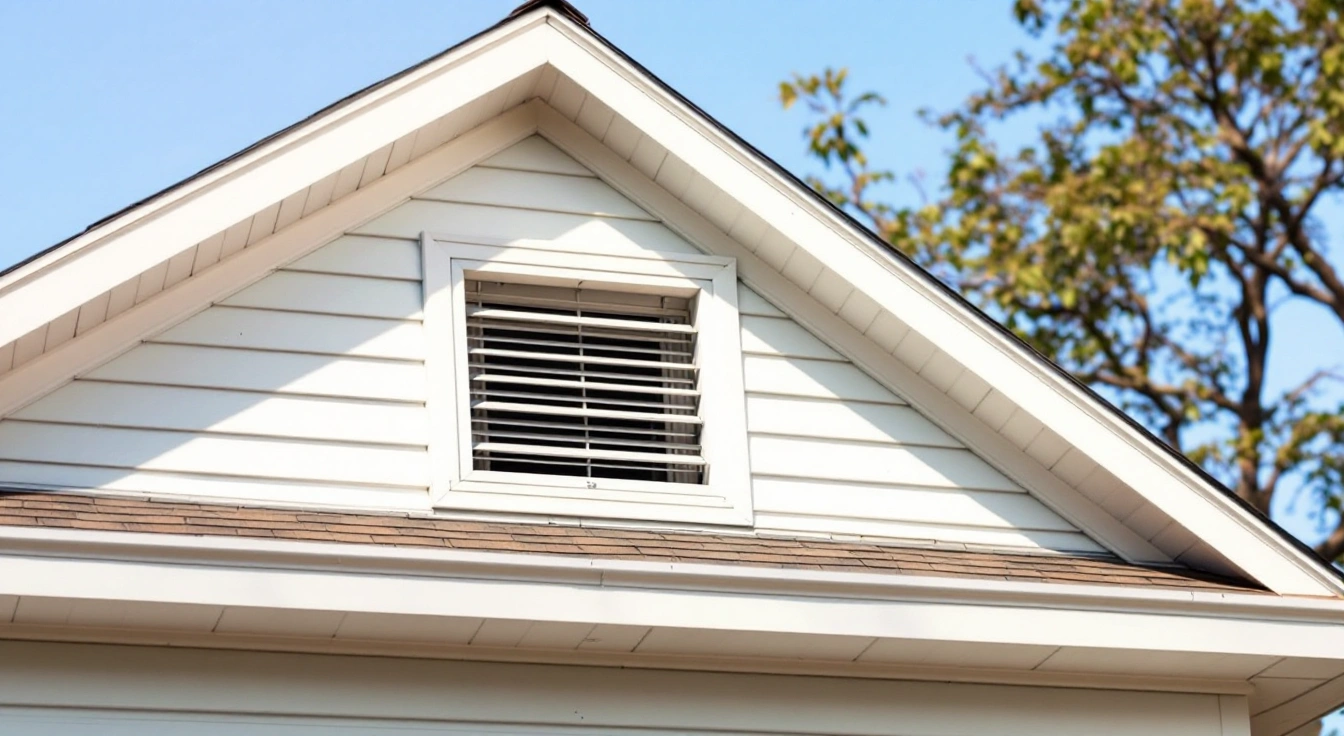
A gable louver also needs a suitable exterior detail. Its opening and drainage arrangement matter. Do not cover required outdoor intake to try to stop water elsewhere. That can change the fan's replacement-air path without solving the leak.
PNNL's attic guidance puts roof ventilation alongside moisture control. A roof leak needs its own repair. Damp insulation can also come from indoor air leakage. The ventilation problems guide separates those possibilities.
Control and sensor faults
A thermostat sensor should be at its intended position. A moved sensor may no longer serve its intended task. An unusual heat source can affect the reading too. Do not relocate it based on one remote reading. Ask the technician to compare the installation with the exact guide.
Some controllers combine temperature and humidity rules. Others use multiple speeds or a timer. An apparent failure can be a misunderstood mode. Record the exact controller and selected profile before deciding that a temperature dial is defective.
Our thermostat guide explains compatibility. A controller replacement must match the fan and supply arrangement. Do not substitute a dimmer or unrelated speed controller. A matching enclosure shape says nothing about the internal switching method.
For app controls, distinguish connection to the hub from fan operation. A Bluetooth connection can be local; it should not be called internet access without documentation. A phone connection issue and a motor issue may need different service. Do not reset the whole system before saving the observed mode and error information.
Attic fan repair and the replacement-air path
PNNL's attic-fan guidance warns about powered suction through ceiling leaks. A repaired motor can restart that problem if the building path remains wrong. A known intake concern needs its own check. The service scope should not end at “blade turns.”
Outdoor replacement air needs the exact required usable area. Screens and louvers restrict the nominal opening. Insulation can block a channel behind a clear exterior vent. Check the intended route and connected space. Do not count every roof opening as interchangeable intake.
An old system may have changed since installation. New insulation can affect eave channels. Roof work may have changed vents. Ceiling alterations can affect leakage. These changes belong in the assessment even if the current motor failure seems unrelated.
The attic ventilation guide helps document that broader plan. A passive net-free-area estimate is not the powered fan's intake requirement. Use the actual fan instructions for that check. A service visit may not include a building-pressure review. Call it that only if the work was included.
What a useful diagnosis contains
| Diagnosis field | Why it matters |
|---|---|
| Exact fan and controller | Parts and logic are model-specific |
| Symptom observed | Keeps the failure separate from a guess |
| Safe isolation and supply result | Establishes the electrical scope |
| Moving-part and mount condition | Distinguishes motor from mechanical causes |
| Roof or wall detail | Identifies water-entry work |
| Intake and assembly concern | Shows whether a building issue remains |
| Proposed part and source | Lets compatibility be checked |
| Exclusions | Prevents a partial repair being called complete |
Scroll for more →
Ask for a written diagnosis before a parts decision. A technician should explain what was verified and what remains uncertain. A phone estimate can help arrange service. It is not an inspection. Keep that limit attached to the quote.
Repair versus replacement
A compatible repair can be sensible when the rest of the system is suitable. A damaged mount or roof detail may make the scope larger. Lack of a verified replacement part can also matter. Do not invent an age limit or a fixed percentage rule that settles every case.
Replacement still needs a fit check. A different base or louver requirement can add work. The new fan may have a different intake requirement or controller. Our replacement guide covers those questions.
Compare complete written scopes. The repair cost guide explains the fields to request. A motor-only repair answers one scope.
A full roof-system replacement answers another. Align the work before comparing the totals. The decision should show what remains suitable after each option.
Parts and warranty records
Use the exact model and serial information from a safe existing record or technician inspection. A generic blade diameter does not identify the motor or control. Supplier listings can use family names that cover different versions. Confirm the replacement part against the manufacturer route.
Keep the service invoice and part identification with the house records. Save the instructions used for the repair. If a warranty is involved, confirm its actual terms with the manufacturer or installer. This guide does not promise coverage from a brand name or product age.
Separate part warranty from labor and water-detail duty. A replaced motor does not establish who covers a later roof leak. Ask the contractor to state those boundaries clearly. That protects the repair record from becoming a vague assertion that “the fan was fixed.”
Return to service
The technician should follow the exact normal-start process after work. Guards and mounting must be restored. The control should operate in the documented mode. The fan should not return to service with an unresolved electrical or moving-part hazard.
Record what was demonstrated and any recommended follow-up. If intake or ceiling concerns remain, that must stay explicit. A control cycle observed during a short visit does not certify all-weather behavior. Nor does a quieter result prove an energy benefit.
Check only the safe normal observations assigned at handover. Do not open the unit to confirm a new part yourself. If the original dangerous symptom returns, stop use and report it. Keep the service route clear for other household members.
FAQ
Can I help a stuck blade start by hand?
No. Do not put a hand or tool through the guard or near a powered blade. Automatic controls can start it unexpectedly. A failed start needs safe isolation and a qualified diagnosis. Repeated restarts or manual assistance can hide the cause and expose you to moving-part or shock hazards.
Does a hot attic prove the thermostat failed?
No. The actual sensor reading and mode matter. Supply power or another fault can also stop the fan. Record accessible control information safely and use the exact guide. A technician must establish what the controller requested before the repair is reduced to a thermostat replacement.
Can I buy any motor with the same size?
Do not choose a motor from size alone. The exact fan model and manufacturer part requirements matter. Supply and mounting can differ. A replacement also needs safe installation and restored guards. Ask the service record to identify the compatible part rather than treating a generic listing as proof.
Does repair fix poor attic ventilation too?
Only if the repair scope actually includes that diagnosis and work. Restoring motor operation does not clear blocked intake or seal ceiling leaks. Keep the air-path assessment separate from the part repair. Record any unresolved roof or building concern before calling the system ready for normal operation.
Verdict
Use a safe diagnosis to decide attic fan repair. Match the exact parts and retain the scope. Include known intake or water-detail problems in the decision. A repaired motor is useful only within a suitable, safely installed system.
Return to the best attic fan guide.