3 Fan Choices for Solar Attic Fan Installation in 2026
The short answer
Choose the exhaust route and safe roof or wall mounting before the panel size. Confirm the exact supplied controls, any backup-power parts and the intake path against the selected unit's guide.
Solar attic fan installation needs more than a sunny roof. The exhaust position, flashing, panel route and outdoor intake must work together. Our three choices compare roof and gable designs with different power arrangements. They are selection examples, not permission to alter a roof or wire a motor without the exact instructions.
Keep in mind: Confirm dimensions, installation scope and suitability with current manufacturer documentation before purchase.
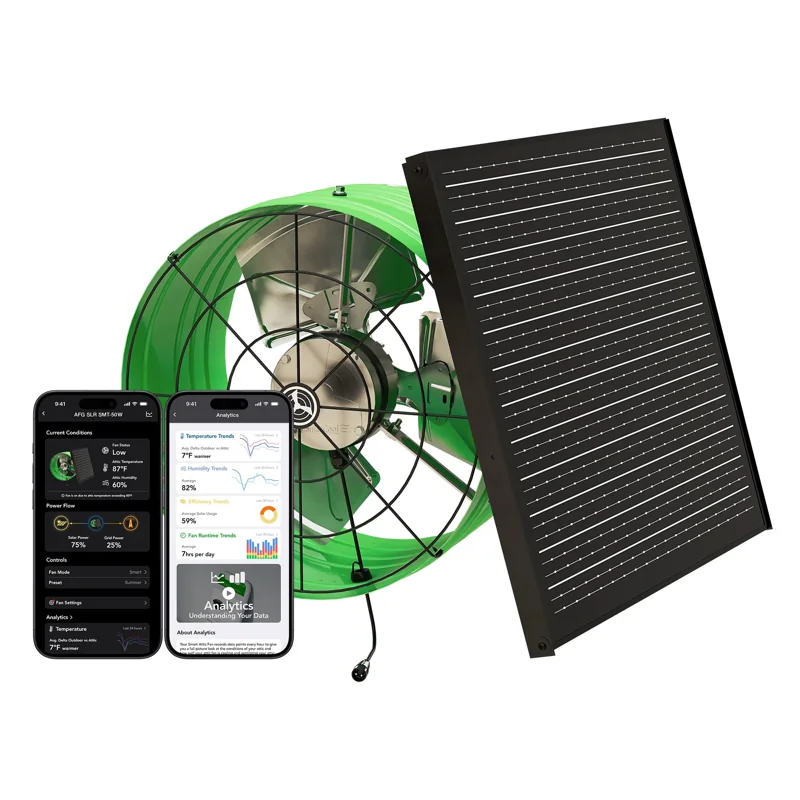
Check the maker's AFG SLR SMT-50W page when matching the gable unit to the plan. It rates airflow at up to 1780 CFM on high and 1088 CFM on low. We follow those figures because catalog airflow and motor claims conflict with that exact-model source. Disputed motor watts and speed claims are omitted. The ratings are published data, not an installed airflow test.
The maker describes a DC motor. The fan includes built-in mounting tabs with anti-vibration pads.
It includes a built-in fire safety shut off.
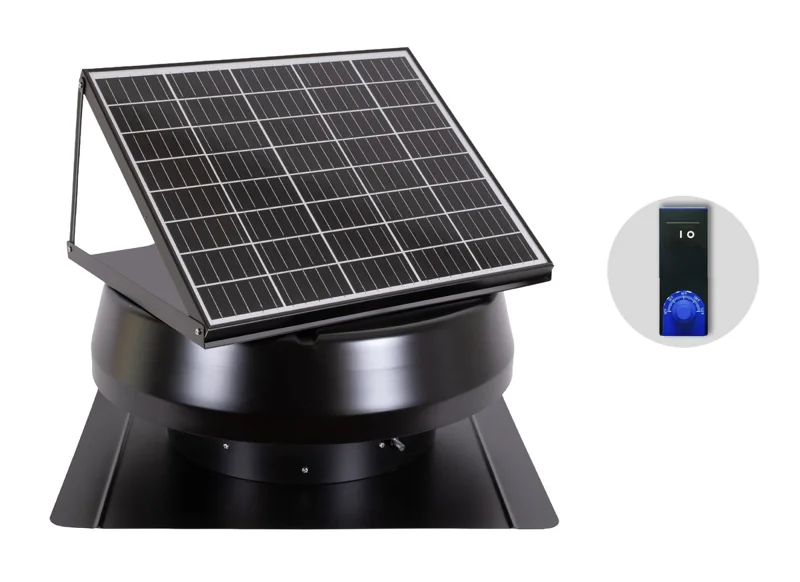
3. iLIVING Hybrid-Ready Solar Roof Fan: hybrid-ready roof
Keep in mind: Confirm dimensions, installation scope and suitability with current manufacturer documentation before purchase.
The 14 inches nylon-fiber-aluminum fan blade is listed with 1150 CFM. It features an IP68 water proof brushless motor with a 15-Year Warranty.
Factors to consider for solar attic fan installation
Choose the model after checking these needs. A fan that fits a hole can still be wrong for the attic. A panel that gets midday sun may miss the hours when the exhaust is wanted. A complete plan connects the planned function with a safe mounting and air path.
Assess roof and solar sun
Find the roof material and condition from a safe location. A fan opening needs matching weather sealing, and a separate panel needs secure mounting too. If there is existing damage, the roof repair and fan work are separate scope items. Do not treat a new exhaust fan as a repair for a leak.
Review shade through the planned run hours. Trees, chimneys and neighboring roof sections can block direct sun. Panel tilt may help with sun, but it cannot make a shaded location sunny. Ask for the selected panel position and the reason for it to appear in the job record.
A mounting limit belongs to one product and manual version. Local wind or snow loads may add rules. No fan here is claimed to fit every roof. Use the exact manual and local rules for the job.
Check both before you order parts.
Intake and mounting needs
An attic exhaust fan needs incoming air through the planned attic vents. Net free area is the usable passage after screens and louvers, not the outer grille size. Record the vent models and their listed free area where known. Blocked eaves and isolated attic sections need attention before fan use.
The DOE mixed-humid guide warns that powered attic exhaust can pull conditioned air through a leaky ceiling. Air sealing belongs in the building check. A larger motor cannot show that incoming air will come from outdoors.
Combustion backdraft is another stop condition. Exhaust must not pull fuel-burning appliance gases into occupied space. Resolve appliance safety and pressure, plus control questions before using the fan. This page does not offer a wiring diagram, framing cutting sequence or a method for bypassing controls.
Installer scope and handover checklist
Write separate scope lines for hardware and mounting. Add intake and power as their own lines. Our solar attic fan installation cost worksheet helps compare those items. Roof and wiring work should be performed by the relevant licensed trades.
At handover, retain the following:
Exact model, supplied parts, manual version and installation date.
Mounting location and stated roof weather-sealing scope.
Intake check and any changes made.
Solar-only or mains-backup power setup.
Walk-through of the stated controls and safe shutdown.
Record of odd vibration or damage, plus unfinished work.
Product warranty and separate workmanship terms.
A fan that does not spin at one check may still work. Sunlight and controls can affect when it runs. The handover should explain those states for the exact model. Never reach into a fan that can start on its own.
Keep the panel and control manuals for service. If noise, damaged wiring or a leak appears, stop the affected use and have the cause checked. Treat solar and mains power as live energy sources during service. Do not assume unplugging a hybrid removes its solar supply.
Keep the work record clear before the roof job
Ask the work scope to name the fan and panel. Keep the full model codes beside the guides that apply to them. A later change of model should lead to a fresh fit check. Do not carry the old roof or intake assumptions over just because the new housing looks much the same.
List what is still open. The old roof opening may need work. A vent's useful free area may be unknown. The power route may need to change.
These are parts of the job to settle, rather than reasons to assume the missing work is free or already done.
Keep a copy of the agreed scope from inside the house. Add the handover record when the job ends. Note which control modes were shown and where to find the safe shutdown steps. This helps each user find the right guide without going onto the roof or near the fan.
We selected the models by their stated roof or gable layout and power package. The US catalog variants were checked on October 16, 2026. The comparison supports planning an installation scope. It does not replace the exact flashing, wiring or panel instructions and makes no claim that we fitted these units on a roof.
Verdict: solar attic fan installation decisions
For solar attic fan installation, choose the exhaust route and safe roof or wall mounting before the panel size. Confirm the exact supplied controls, any backup-power parts and the intake path against the selected unit's guide.
FAQ
Can a gable fan avoid a roof opening?
It may use a well-suited existing gable opening for exhaust, but the separate panel still needs a mounting route. The vent must fit the fan and provide a clear passage. Do not assume that a gable kit removes every roof task or that any existing grille is adequate.
Can I add a fan to a sealed attic?
Do not add outdoor attic exhaust until the attic's design is understood. A sealed conditioned attic serves a different role from a vented roof space. An added opening can conflict with that role. Resolve the design and air-boundary question before selecting the fan or its mounting position.
What should a completed installation record include?
Keep the exact model and manual, plus mounting details. Record intake and power, then the control walk-through. Retain product and workmanship terms separately. A roof photo alone does not prove the whole job.
Record unfinished items instead of treating fan movement as full acceptance.
Can I use any adapter for night operation?
No. Use only the approved hardware for the exact fan and follow its needed wiring work. A solar-only unit does not become a well-suited hybrid through a homemade adapter. If night use is needed, select the model and plan that stated power route before the job begins.